
Calystegia pulchra
Calystegia pulchra
Description
How to tell it apart
Calystegia pulchra, commonly known as hairy bindweed, is a perennial herbaceous plant belonging to the Convolvulaceae family, characterized by its twining stems.
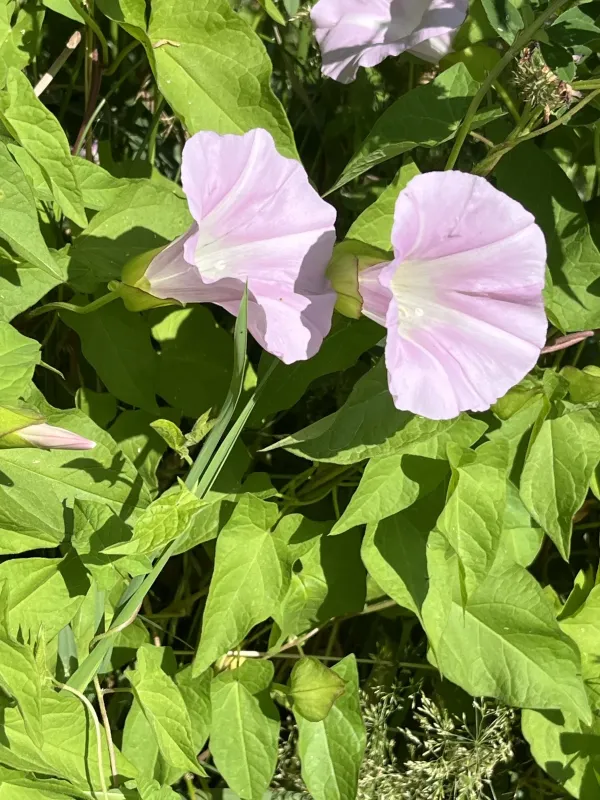
It is identifiable by its large, funnel-shaped, pink flowers featuring darker longitudinal stripes, which make the plant visually distinct during its blooming period.
The leaves are alternate, heart-to-arrow shaped with a pointed apex, and are supported by long petioles that enable the plant to climb effectively.
The plant possesses a robust, creeping root system that allows it to spread rapidly through the soil and regenerate even after partial mechanical damage.
A specific taxonomic feature is the presence of two large bracteoles that fully enclose the calyx, distinguishing it from other closely related bindweed species.
Where it grows
This weed thrives in moist, fertile soils, frequently inhabiting riverbanks, wetlands, and damp meadows where water is abundant.
In agricultural settings, it is commonly found in arable fields, orchards, and gardens, often spreading from field margins and hedgerows into the crop area.
It prefers environments with moderate temperatures and sufficient rainfall, allowing it to form dense, impenetrable mats that compete for space.
Dissemination occurs through both seed dispersal, aided by wind and water, and vegetative propagation through the spreading of rhizome segments.
The plant is highly invasive and can quickly establish itself in areas where the soil has been disturbed by human activity or machinery.
Harm it causes
The primary damage caused by hairy bindweed is the severe competition with crops for sunlight, moisture, and essential mineral nutrients.
By twining around crop stems, the weed causes severe lodging, which significantly disrupts plant development and hinders photosynthesis.
This lodging creates major operational issues, as it makes mechanical harvesting difficult and leads to increased yield losses during field operations.
The extensive root network of the weed depletes soil moisture rapidly, putting cultivated plants under water stress during critical growth stages.
Furthermore, the dense foliage of the bindweed creates a humid microclimate that favors the outbreak of various fungal diseases and pests.
How to control
A robust agricultural strategy involves deep plowing with soil inversion to expose and weaken the rhizomes, effectively reducing the weed's vigor.
Frequent inter-row cultivation is essential to sever the climbing stems and deplete the nutrient reserves stored within the extensive root system.
Crop rotation incorporating competitive cover crops can shade the soil surface, preventing the weed from establishing a firm foothold in the field.
Chemical control using systemic herbicides, particularly those containing glyphosate, is most effective when applied to actively growing foliage post-harvest.
- Regular mowing of field edges to prevent seed production and spread.
- Manual extraction of rhizomes in smaller gardens or organic plots.
- Targeted application of selective herbicides in accordance with local safety regulations.
Taxonomy
- Latin name
- Calystegia pulchra
- Family
- Вьюнковые
- EPPO code
- CAGPL