
Camonea umbellata
Camonea umbellata
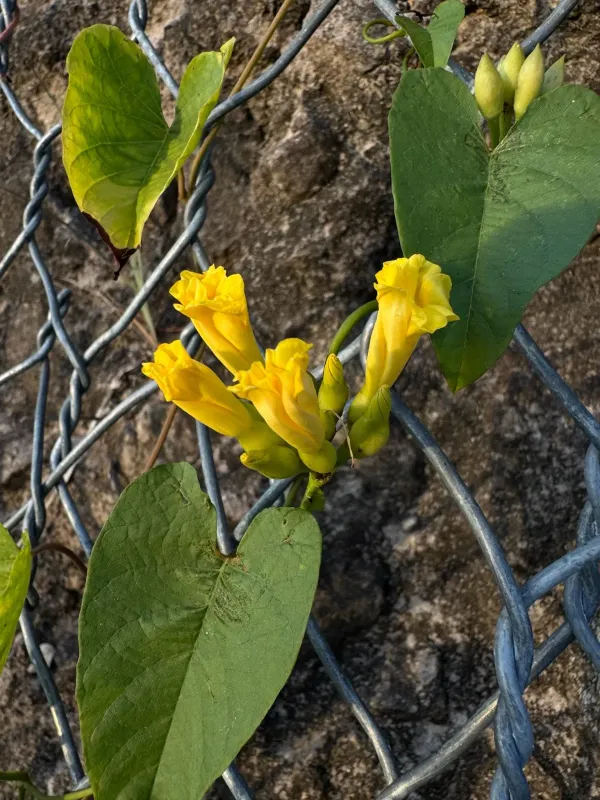
Description
How to tell it apart
Camonea umbellata is a perennial herbaceous plant belonging to the Convolvulaceae family. It is often misidentified due to its close morphological similarity to other bindweed species.
The stems are climbing or trailing, allowing the plant to utilize crops as a trellis. This growth habit enables it to occupy space efficiently and access sunlight effectively.
Leaves are heart-shaped or sagittate, attached to petioles in an alternate arrangement. The leaf surface is often pubescent, providing protection against environmental stressors.
The flowers are arranged in umbel-like clusters, which gives the species its specific botanical name. The corolla is typically funnel-shaped, often appearing in white or light pink hues.
The root system is extensive and deeply penetrating, which makes the plant highly resilient and difficult to eradicate using standard mechanical tilling methods.
Where it grows
The native range of Camonea umbellata is primarily in tropical and subtropical regions. However, it has spread to various agricultural ecosystems worldwide as an introduced weed.
It favors well-lit areas with fertile soils. It is most commonly found in row crop fields where supplemental irrigation and fertilizers provide optimal growth conditions.
The plant frequently inhabits field margins, roadsides, and non-cultivated areas, serving as a constant seed reservoir for nearby agricultural fields.
It exhibits significant plasticity regarding moisture, though it thrives best in conditions of sufficient humidity and low competition during its early growth phases.
Seed dispersal is facilitated by wind and the movement of agricultural machinery, leading to rapid infestation of new areas if proper sanitation practices are ignored.
Harm it causes
The primary impact of Camonea umbellata is its intense competition for nutrients and soil moisture, which significantly drains resources needed by cultivated crops.
The vining stems cause crop lodging, which complicates mechanical harvesting, lowers efficiency, and leads to substantial losses in both quantity and quality of the yield.
By shading cultivated plants, the weed inhibits photosynthesis, directly impacting biomass accumulation and the overall reproductive success of the crop.
Weed seed contamination in harvested grain leads to higher processing costs, as additional cleaning stages are required to meet market quality standards.
The plant serves as a host for various viruses and pathogens. Pests that thrive on this weed can easily migrate to crops, increasing the risk of widespread infestations.
How to control
Mechanical control involves deep autumn plowing to cut the root systems and expose them to harsh weather conditions, which helps to exhaust the root reserves.
Implementing effective crop rotations that include dense canopy crops can significantly suppress the development of this weed by limiting its access to necessary sunlight.
Chemical control relies on the use of systemic herbicides. Post-harvest applications on actively growing weed regrowth are particularly effective at reaching the deep roots.
When applying herbicides during the growing season, strict adherence to growth stages and application rates is essential to avoid crop damage and ensure maximum efficacy.
- Regular harrowing of fields to eliminate emerging seedlings.
- Enforcement of strict phytosanitary rules for seed lots.
- Continuous monitoring and mowing of surrounding field margins.
Taxonomy
- Latin name
- Camonea umbellata
- Family
- Вьюнковые
- EPPO code
- MRRUM