
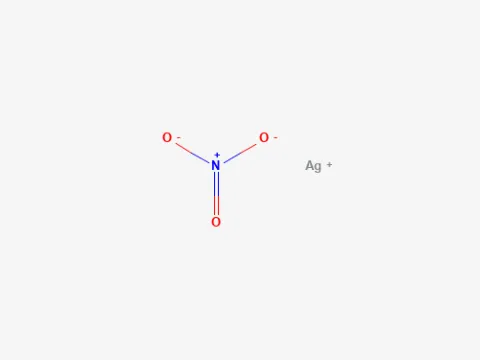
Silver nitrate
Silver nitrate (AgNO3) belongs to a group of inorganic silver compounds that possess significant antimicrobial and fungicidal properties. In agrochemical formulations, the active substance dissociates into silver ions.
What the section contains
Silver nitrate
Silver ions exhibit high biological activity by blocking the enzymatic systems of pathogens. They bind to thiol groups of proteins and enzymes, disrupting metabolic processes within the cells of microorganisms.
The mechanism of action involves destroying the integrity of pathogen membranes and disrupting electron transport. This leads to the rapid death of fungal spores and mycelium, as well as the inhibition of phytopathogenic bacterial activity.
The compound provides a prolonged effect, as silver ions are slowly released from chelated or complex compounds. This ensures long-term protection of treated tissue surfaces or planting material.
The substance is chemically active, so its efficacy directly depends on the pH of the solution and the presence of organic impurities that may bind the ions, reducing the total bioavailability of the product.
Products based on silver nitrate are primarily used to suppress a wide spectrum of pathogenic microorganisms, including fungi of the Ascomycetes and Basidiomycetes classes.
The main targets include causal agents of powdery mildew, various types of leaf spots, and bacterial diseases of vegetable and flower crops. It is also effectively used for the sanitation of seeds.
The agent is frequently used for disinfecting surfaces in greenhouses and nurseries, killing pathogen spores that persist on the structural elements of protected ground facilities.
In floriculture, silver nitrate is used to extend the life of cut flowers and inhibit decay processes in vases, where bacteria that block the conductive vessels of the stem multiply rapidly.
In certain agrotechnical methods, silver ions are applied to suppress the development of mold fungi during the long-term storage of agricultural tubers and bulbs.
Application rates and working solution concentrations are strictly regulated by the product instructions, as an excess of silver can exhibit phytotoxicity to young plant tissues.
For seed treatment, low concentrations of the substance are typically used, allowing for surface sterilization without damaging the embryo. Exposure times vary from 30 minutes to several hours.
When spraying growing crops, it is important to consider the developmental phase, as concentrations acceptable for mature plants may cause burns on seedlings or young shoots.
In greenhouses, disinfection should be conducted when plants are not present to avoid negative impacts on young crops and soil microflora.
Periodic monitoring of plant health after application is recommended, as the action of silver ions can be influenced by light levels and temperature in the treatment zone.
Silver nitrate is chemically unstable when exposed to light: under sunlight, it undergoes photolysis, turning dark and losing its fungicidal activity.
It is strictly prohibited to mix silver nitrate-based products with most other pesticides or fertilizers without prior compatibility testing, as this may lead to precipitation.
When working with the substance, personal protective equipment for skin and mucous membranes is required, as it leaves stubborn dark stains and can cause chemical irritation.
Disposal of product residues must be carried out in accordance with heavy metal waste regulations to prevent contamination of wastewater and soil.
Restrictions include a ban on use near water bodies due to the high toxicity of silver to aquatic organisms and water-dwelling microorganisms.