

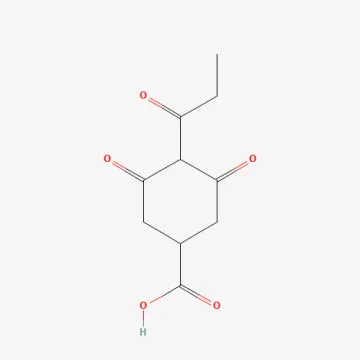
Description
Mode of action
Prohexadione (commonly used as prohexadione-calcium) belongs to the acylcyclohexanedione chemical class and acts as an effective plant growth regulator or retardant.
The primary mode of action is the inhibition of gibberellin biosynthesis, which is the hormonal pathway responsible for stem elongation and vegetative growth.
By targeting specific enzymes in the metabolic pathway of gibberellins, prohexadione prevents excessive shoot development and promotes a more compact growth habit.
This redirection of plant resources helps in the optimization of energy allocation towards flower bud formation and fruit development rather than leafy growth.
Additionally, prohexadione induces biochemical changes in plants that contribute to an enhanced defense response against several fungal and bacterial pathogens.
What it targets
Prohexadione is extensively used in the commercial production of pome fruits, such as apples and pears, to maintain tree structure and size.
It is particularly effective at suppressing the growth of terminal shoots, which simplifies canopy management and reduces the necessity for mechanical pruning.
The application of this substance is a key element in managing fire blight, as slower shoot growth physically restricts the movement of the bacteria within the tree.
It is also occasionally utilized in stone fruit orchards and nursery stock to ensure balanced growth and improve the overall physiological quality of the plants.
- Apples (shoot growth management)
- Pears (bacterial disease mitigation)
- Nursery stock (growth control)
Rates and timing
Timing for prohexadione application is critical, usually starting when shoots have achieved 5 to 10 centimeters of new growth during the spring season.
Dosage rates must be adjusted according to the tree vigor, the specific growth characteristics of the cultivar, and current climatic conditions.
In seasons with high rainfall or prolonged growth periods, multiple applications might be necessary to maintain the desired canopy regulation.
Consistent monitoring of growth rates allows agronomists to tailor the frequency and concentration of the application for optimal results.
The active ingredient is absorbed relatively quickly by the foliage, ensuring that it remains effective even if light rainfall occurs after application.
Restrictions
Applications should be avoided when trees are under significant environmental stress, such as extreme heat, drought, or waterlogging, to prevent phytotoxicity.
Strict adherence to label rates is mandatory, as excessive amounts can over-regulate growth and potentially reduce fruit size or quality.
Care should be taken during spraying to avoid drift to non-target crops or sensitive vegetation located in the vicinity of the treated area.
Prohexadione products must be stored in cool, dry, and secure facilities, keeping them separate from fertilizers and other agricultural chemical supplies.
Before mixing prohexadione with other pesticides or foliar nutrients, compatibility tests are recommended to prevent stability issues in the tank mix.
Regulatory
Status in the European Union
Approved in the EU
- CAS number
- 127277-53-6
- Category (EU)
- PG - Plant growth regulator
- ADI
- 0.2 mg/kg bw/day
- ARfD
- Not appl.
- AOEL
- 0.35 mg/kg bw/day
EU legislation
EU status is for reference only and does not replace national registration in your country.
Content graph
Connections · Prohexadione
Most often together:
Marketplace
Products · 6

Regalis
БАСФ СЕ., М.Лювігсхфен, Німеччина.
Plant Growth Regulators
0
0
·
59
3 offers
95.99 €per 1 l
Buy


