
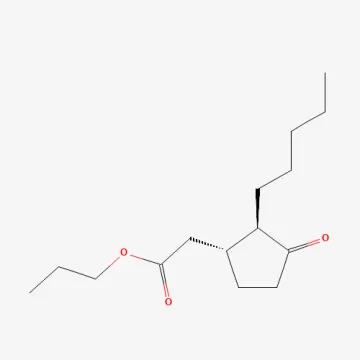
Prohydrojasmon
Description
Mode of action
Prohydrojasmon is a synthetic analog of the naturally occurring plant hormone jasmonic acid, which plays a vital role in plant development and stress response signaling.
The compound acts as a powerful activator of specific metabolic pathways in plants, specifically those responsible for the biosynthesis of secondary metabolites like anthocyanins.
Unlike natural jasmonates, which are chemically unstable, prohydrojasmon offers high stability and systemic activity, allowing it to penetrate plant tissues effectively for a reliable physiological effect.
It triggers gene expression that accelerates the natural ripening process, specifically focusing on pigment accumulation without causing premature senescence of the fruit tissue.
The regulator also enhances the plant's natural defense mechanisms, providing a transient boost in stress tolerance during the critical final stages of fruit development.
What it targets
Prohydrojasmon is primarily used in commercial fruit production, including pome fruits like apples, stone fruits like peaches and nectarines, and table grapes.
The main objective of application is to improve the intensity and uniformity of fruit coloration, which is a critical quality standard for fresh market produce.
By promoting even maturation, the product reduces the number of harvests required and minimizes the amount of fruit that fails to meet aesthetic color standards.
It is particularly effective for cultivars that struggle to develop their full potential color under suboptimal climatic conditions, such as high temperatures or low light during the ripening phase.
In addition to cosmetic benefits, it helps to balance sugar content and firmness, ensuring that the fruit remains suitable for transport and long-term storage after harvest.
Rates and timing
Application rates depend on the crop, variety, and the specific timing of the ripening phase. Accurate dosage is essential to ensure efficacy and avoid potential wastage.
The application should typically occur at the onset of fruit coloration, approximately 2 to 4 weeks prior to the projected harvest date, depending on environmental variables.
To maximize coverage, professional spraying equipment is required. The use of high-quality adjuvants is often recommended to improve the adhesion of the solution to the fruit's waxy cuticle.
The water pH for the tank mix should be strictly controlled, as extreme values can lead to the rapid degradation of the active ingredient before it is absorbed by the plant.
Farmers are advised to consult the specific product label for regional restrictions and to adjust rates based on local agricultural extension service recommendations.
Restrictions
Strict adherence to pre-harvest intervals is required to ensure that residual levels comply with international food safety standards and market regulations.
Operators must wear appropriate personal protective equipment during mixing and application to prevent skin or eye irritation from concentrated formulations.
Storage must occur in a cool, well-ventilated area away from direct sunlight and temperature extremes, which can compromise the chemical stability of the regulator.
Avoid tank mixing with incompatible substances, particularly strong alkalis, which may deactivate the prohydrojasmon molecules through hydrolysis.
Do not apply the product if the crop is under extreme environmental stress, as this may result in an inconsistent physiological response or reduced efficacy of the treatment.
Status in the European Union
Not approved in the EU
- Category (EU)
- PG - Plant growth regulator
EU status is for reference only and does not replace national registration in your country.