
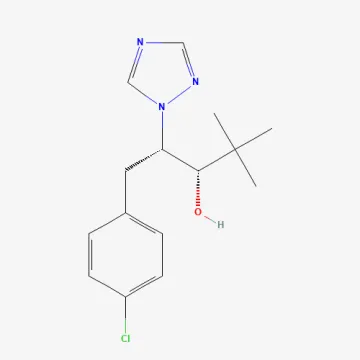
Paclobutrazol
Description
Mode of action
Paclobutrazol is a systemic triazole plant growth regulator widely known for its efficacy as a retardant. It works by interfering with the plant's hormonal balance, specifically by inhibiting the production of gibberellins.
The mechanism involves blocking the oxidation of ent-kaurene to ent-kaurenoic acid, which is a critical step in the biosynthetic pathway of gibberellins. By reducing these hormones, the plant slows down vertical cell division.
Beyond its growth-regulating properties, paclobutrazol acts as a fungicide. It targets specific fungal pathogens by disrupting the synthesis of ergosterol, which is essential for fungal cell wall development.
Plants treated with this substance exhibit shorter internodes, thicker stems, and darker green foliage due to increased chlorophyll density. This change in morphology helps plants withstand environmental stress more effectively.
The application shifts the plant's metabolic energy from excessive vegetative growth to better root development and reproductive growth, which is highly beneficial for fruit and flower production.
What it targets
Paclobutrazol is extensively used in fruit orcharding, particularly for apple and pear trees, to maintain a compact crown shape. This facilitates easier pruning, spraying, and fruit harvesting in high-density orchards.
In the ornamental industry, it is a standard tool for nursery managers to produce compact potted plants and shrubs. This creates uniform, marketable products that are easier to ship and look more appealing to customers.
The chemical is also applied to vegetable seedlings to prevent them from becoming leggy or spindly, ensuring that plants are strong and prepared for transplantation into fields or greenhouses.
In some agricultural sectors, it is used on turfgrass or cereal crops to prevent lodging. By strengthening the stems and reducing height, it helps ensure that crops can withstand wind and heavy rains.
It also serves as a management tool in floriculture to synchronize flowering times and improve the visual quality of various bedding plants and perennials.
Rates and timing
Dosage and timing of paclobutrazol depend heavily on the specific crop and the desired level of growth suppression. It can be applied via foliar spray or soil drenching, with soil application usually yielding more persistent results.
Applications are generally timed during periods of rapid vegetative growth. For orchards, this often occurs after the main growth flush, while for greenhouse crops, it is applied during the initial stages of development.
Given its high potency, precise measurement is crucial. Growers must adhere strictly to label rates to avoid over-suppression, which can stunt plant development for extended periods.
It is recommended to conduct small-scale trials before a widespread application, as different cultivars and species may show varying sensitivity levels to the treatment.
Continuous monitoring of plants after application is essential to observe the growth response and determine if further treatments are necessary or if the growth rate has been sufficiently stabilized.
Restrictions
One of the primary limitations of paclobutrazol is its persistence in the soil. Because it can remain active for a long duration, growers must be cautious about crop rotation and potential effects on subsequent sensitive crops.
Applying the chemical to plants already under stress from drought, cold, or pests is strongly discouraged. Such application can lead to unpredictable stress responses, potentially causing phytotoxicity or irreversible growth stagnation.
Safety equipment is mandatory during handling, as the chemical can be harmful upon inhalation or skin contact. All applications should be done with careful consideration for the surrounding environment.
Environmental protection is paramount. Users must ensure that runoff does not reach local water sources, as the compound can have long-lasting effects on aquatic ecosystems.
Storage should be in a secure, climate-controlled area, away from direct sunlight and out of reach of children or unauthorized personnel. Always follow local regulatory guidelines for disposal of containers and unused product.
Status in the European Union
Approved in the EU
- CAS number
- 76738-62-0
- Category (EU)
- PG - Plant growth regulator
- Approved from
- 01.06.2011
- Approval until
- 31.08.2026
- ADI
- 0.022 mg/kg bw/day
- ARfD
- 0.1 mg/kg bw
- AOEL
- 0.1 mg/kg bw/day
EU status is for reference only and does not replace national registration in your country.