
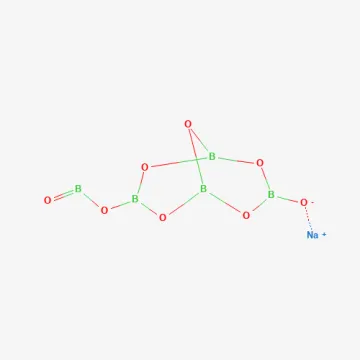
Sodium pentaborate
Description
Mode of action
Sodium pentaborate is an inorganic boron-based compound recognized in modern agriculture as an effective active ingredient for plant protection. It serves as a multifunctional agent capable of controlling both biological pathogens and specific insect pests.
The mode of action involves the disruption of critical cellular processes within the pest or pathogen. By interfering with enzyme synthesis and nucleic acid metabolism, sodium pentaborate effectively stunts the growth and reproduction of target organisms.
When applied to crops, the substance often exhibits systemic activity, ensuring that the active ingredients are distributed through the plant tissues to provide comprehensive protection against external threats.
In addition to its role as a pesticide, sodium pentaborate acts as a supplemental source of boron, an essential micronutrient. This dual functionality supports plant vigor while simultaneously managing the biotic stress caused by pests or fungi.
The efficacy of the treatment is highly dependent on the absorption rate and the environmental conditions, as boron compounds require optimal contact time to achieve the desired lethal effect on the target population.
What it targets
This compound is primarily used to control a variety of insect pests, particularly those that damage fruit trees and ornamental foliage, through its toxicity to chitinous structures.
It acts as a fungicide in storage conditions, preventing the growth of molds and rots that commonly affect seeds, tubers, and other agricultural products during the post-harvest period.
Sodium pentaborate is also employed as a herbicide for selective weed control, providing a chemical method to reduce competition from invasive herbs in specific land management scenarios.
Furthermore, it is widely utilized for the sanitization of agricultural structures, such as greenhouse frames and grain bins, where it acts as a preventative agent against wood-destroying pests.
- Control of insect populations
- Prevention of fungal storage rot
- Surface sanitization in agriculture
Rates and timing
Application rates are determined by the specific crop and the target pest. Typically, concentrations range from 0.5% to 2.0% in aqueous solutions to avoid any risk of chemical phytotoxicity.
The timing of the application is crucial; treatments should be performed during the early stages of pest infestation or disease development to ensure maximum control efficiency.
Uniform coverage of the crop surface is necessary, requiring well-calibrated spraying equipment to distribute the active ingredient without causing overspray or localized pooling.
Repeat treatments should be planned according to the residual activity of the boron compound and the life cycle of the pest, ensuring that environmental factors do not wash away the solution prematurely.
Care must be taken to ensure that the solution is properly mixed, as sodium pentaborate is a crystalline solid that requires adequate dissolution time in water before field application.
Restrictions
Safety is paramount when handling sodium pentaborate; all personnel should wear appropriate personal protective equipment, including respirators and chemical-resistant gloves, to prevent inhalation or contact.
Over-application can lead to soil boron accumulation, which may cause long-term phytotoxicity issues for future crops in the rotation; therefore, soil testing is recommended.
Compatibility with other agrochemicals must be checked, as highly alkaline or highly acidic mixtures may destabilize the sodium pentaborate and reduce its biological efficacy.
Precautions must be taken near water bodies to prevent runoff, as high levels of boron are detrimental to aquatic life and can disrupt local ecosystems.
Storage should be conducted in original, sealed packaging in a cool, dry area, strictly segregated from fertilizers, seeds, or food products to prevent accidental contamination.
Status in the European Union
Not approved in the EU
- Category (EU)
- PG - Plant growth regulator
EU status is for reference only and does not replace national registration in your country.