
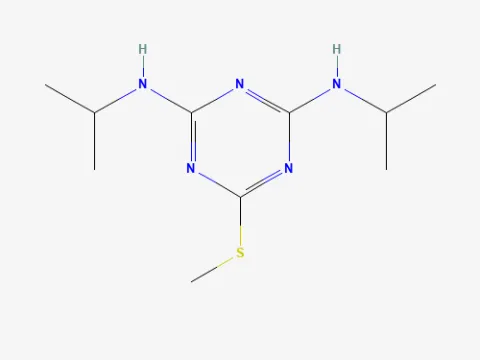
Prometryn
Prometryn belongs to the chemical class of triazine derivatives. It is a selective systemic herbicide that is absorbed by both seedlings and the root system of weeds during germination.
What the section contains
Prometryn
The mode of action involves the inhibition of photosynthesis in weed plants. Prometryn blocks electron transport, leading to the cessation of vital compound production necessary for plant survival.
When applied to the soil, the substance creates a protective "screen" that stops the development of unwanted vegetation at early stages. The active ingredient penetrates weeds at the moment of seed germination and causes their death before they emerge above the soil surface.
The effectiveness of the preparation directly depends on the moisture level of the soil. To achieve maximum results, sufficient moisture is required to ensure the dissolution of the substance and its availability to the root systems of the sprouts.
The duration of the protective action ranges from 6 to 12 weeks, depending on soil type, dosage, and local climatic conditions. This protects the crop during the most critical growth periods.
Prometryn effectively destroys a wide range of annual broadleaf weeds. Sensitive species include pigweed, knotweed, shepherd's purse, and various types of goosefoot and chamomile.
The herbicide also shows activity against some annual grass weeds, although their sensitivity to the product is somewhat lower than that of broadleaf plants.
The product does not have a significant impact on perennial rhizomatous weeds, so its application is advisable only against seed-based vegetation regrowth.
The main crops for Prometryn use include sunflower, soybean, pea, chickpea, potato, coriander, and carrot. The product allows crops to grow without competition during the initial vegetation stages.
- Amaranthus retroflexus
- Chenopodium album
- Polygonum spp.
- Capsella bursa-pastoris
- Matricaria chamomilla
The application rate of Prometryn is determined by the soil type and its mechanical composition. Minimum dosages are used on light sandy soils, while maximum recommended rates are applied on heavy loams.
The product is applied primarily before the emergence of the crop. Spraying is optimally conducted immediately after sowing, before weeds form their first true leaves.
When used in potato fields, application is often performed after planting but before crop emergence. For carrots, application is permitted both pre-emergence and at the 2-true-leaf stage of the crop.
A key requirement is proper soil preparation. The field must be leveled, without large soil clods, as their presence reduces the uniformity of the herbicide screen distribution.
The working fluid consumption is typically 200–400 liters per hectare. It is important to ensure uniform coverage of the soil surface to avoid "gaps" in protection where weeds could develop.
Prometryn is sensitive to soil conditions. In dry conditions, effectiveness decreases as the active ingredient cannot properly move into the weed germination zone.
There is a risk of phytotoxicity to crop plants if excessive rainfall occurs immediately after application. Excess moisture can cause the herbicide to leach into the seed zone, causing crop stunting.
Inter-row cultivation after soil herbicide application is prohibited. Destroying the protective screen mechanically leads to a loss of product effectiveness and allows new weeds to emerge.
When selecting the next crop in the rotation, the residual effects of Prometryn should be considered. Although it breaks down during the season in most soil types, the risk of accumulation is higher in alkaline soils.
When working with the product, safety measures must be strictly followed. The use of personal protective equipment for skin, respiratory organs, and eyes is mandatory to prevent poisoning.