
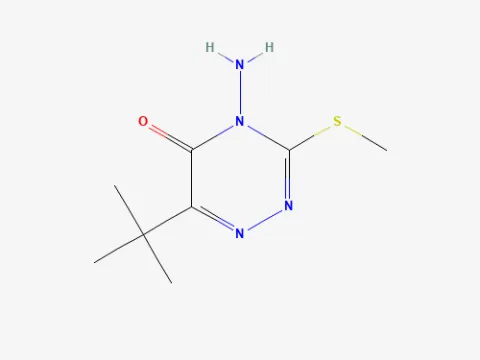
Metribuzin
Metribuzin is a systemic herbicide that belongs to the triazinone chemical class. It is primarily absorbed by the roots, but can also be taken up by the leaves of weeds.
What the section contains
Metribuzin
Its primary mode of action is the inhibition of photosynthesis by blocking electron transport in photosystem II. This effectively stops the weed's ability to produce energy, leading to plant death.
The selectivity of metribuzin is based on the plant's ability to metabolize the herbicide into non-toxic compounds, allowing crops like potatoes or soybeans to survive while weeds succumb.
Soil moisture plays a crucial role in the herbicide's effectiveness. Adequate moisture ensures that the active ingredient is available in the soil solution to be absorbed by germinating weed seeds.
Metribuzin remains active in the soil for several weeks, providing residual control against successive flushes of weeds, which is critical during the early stages of crop growth.
Metribuzin is used to control a broad range of annual broad-leaved weeds and several grass species that compete with crops for nutrients, light, and water.
- Common lambsquarters
- Redroot pigweed
- Wild mustard
- Shepherd's purse
- Common chamomile
The substance is widely applied in crops such as potatoes, tomatoes, soybeans, and alfalfa. It can be used both as a pre-emergence and post-emergence treatment depending on local agricultural practices.
While highly effective against many broad-leaved species, its control of certain grasses may be limited, often necessitating tank mixes with other herbicides for broad-spectrum results.
Application rates are determined by soil type, organic matter content, and the specific weed pressure. Generally, lower rates are recommended for lighter soils to prevent crop injury.
For pre-emergence applications, the soil should be finely tilled and moist. Uniform coverage is essential to ensure a consistent barrier against emerging weeds.
When applying post-emergence, timing is critical. Applications should be made when weeds are small and actively growing, while ensuring the crop is at a safe growth stage to tolerate the chemical.
Optimal environmental conditions, such as mild temperatures and low wind, are required for spraying to ensure efficacy and avoid drift into non-target areas.
Metribuzin should not be applied to very sandy soils with low organic matter, as the risk of leaching into the crop's root zone is high, which can cause significant damage.
Applications should be avoided during periods of plant stress, such as frost, extreme heat, or drought. Stress can reduce the crop's ability to metabolize the herbicide effectively.
Crop rotation must be considered, as residual levels of metribuzin in the soil may affect the establishment of sensitive follow-up crops in the next season.
Users must adhere to strict safety regulations, including the use of protective equipment when handling the product. Prevent contamination of water sources and run-off.
Chemical stability should be maintained by avoiding mixtures with highly alkaline substances, which can degrade the active ingredient and reduce its overall performance.