
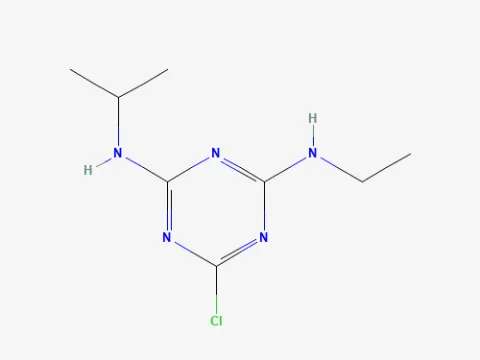
Atrazine
Atrazine is a systemic herbicide belonging to the chlorotriazine chemical class. It is widely recognized for its ability to provide pre-emergence and early post-emergence control of weeds.
What the section contains
Atrazine
The primary mode of action involves the inhibition of photosynthesis in target plants. Atrazine disrupts the Hill reaction, effectively blocking electron transport within the chloroplasts.
Upon application, the active ingredient is primarily absorbed by the roots of weeds, although foliar absorption can occur in younger plants.
Once absorbed, the substance is translocated through the xylem to the leaves, where it accumulates, leading to chlorosis, metabolic starvation, and eventual plant death.
Selectivity is achieved through the metabolic capacity of specific crops, such as maize and sorghum, which can detoxify atrazine, while susceptible weeds lack this ability.
Atrazine is effective against a wide array of annual broadleaf weeds and some annual grass species.
It is commonly used to target problematic weeds such as pigweed, lambsquarter, smartweed, and various mustard species.
The herbicide is most effective when applied to germinating seeds or very small seedlings, preventing them from establishing in the crop canopy.
It is primarily registered for use on maize, sorghum, and sugarcane, providing essential protection during the critical early growth stages.
Because it does not control many perennial weeds effectively on its own, it is frequently used as a foundational component in integrated weed management programs.
Application rates depend heavily on soil texture, organic matter content, and the specific weed species targeted in the field.
Higher rates are typically required on clay-rich soils, whereas lower rates are sufficient for sandy soils to avoid potential crop injury.
Soil moisture is critical for the activation of atrazine; adequate rainfall or irrigation after application ensures the chemical reaches the root zone of the weeds.
It is often applied in tank mixes with other herbicides, such as HPPD inhibitors or acetochlor, to broaden the spectrum of controlled weed species.
Timing must be strictly followed according to the crop growth stage to maximize weed control while minimizing the risk of crop stress.
Atrazine exhibits residual activity in the soil, which necessitates careful planning of crop rotation to avoid damage to sensitive crops planted in subsequent seasons.
Leaching potential should be considered, particularly in areas with shallow water tables or highly permeable, sandy soil profiles.
Workers must adhere to strict safety protocols, including the use of personal protective equipment, to minimize exposure during mixing and application.
Environmental stewardship is essential, and buffer zones should be maintained near water bodies to prevent surface runoff contamination.
- Always follow label instructions for specific crop stages.
- Avoid spraying during high wind conditions to prevent drift.
- Store products in a secure, climate-controlled area.
- Triple rinse containers and dispose of according to local regulations.