
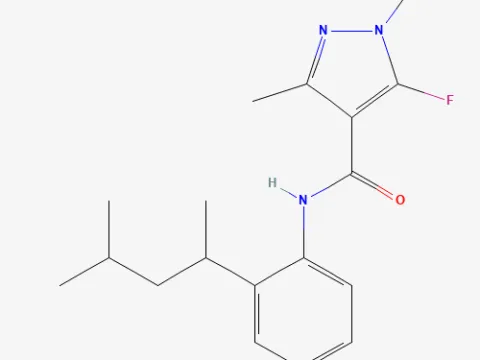
Penflufen
Penflufen belongs to the pyrazole-carboxamide chemical class. It acts as a potent succinate dehydrogenase inhibitor (SDHI), interfering with the fungal mitochondrial respiration process in the second phase of the Krebs cycle.
What the section contains
Penflufen
The mechanism of action involves blocking the mitochondrial energy metabolism of fungal pathogens. By disrupting this vital energy production pathway, the fungicide effectively halts the growth and development of the pathogen, leading to its death.
The substance possesses high systemic activity and excellent translocation properties within plant tissues. It is distributed evenly within the seedling, providing long-lasting protection against infections during the critical early stages of crop development.
Formulations based on penflufen are characterized by high biological efficacy even at low application rates, making them a crucial component in modern integrated pest management (IPM) programs.
Due to its unique molecular structure, the compound acts effectively against a broad spectrum of pathogens, including strains that may show resistance to other fungicide classes, thus mitigating the risk of resistance buildup.
Penflufen is primarily employed for the control of seed-borne and soil-borne pathogens. Its main applications include the treatment of cereal crops and potato planting materials.
It is highly effective against Rhizoctonia solani, a soil-borne fungus that causes significant damage to root systems and stem bases. The product also provides excellent control over various species of smut diseases in cereals.
The target list includes pathogens responsible for root and foot rots, such as Fusarium spp. and Helminthosporium spp. Using penflufen significantly reduces the incidence of these diseases in early seedling stages.
For potatoes, penflufen is a key tool in controlling soil-borne infection, effectively preventing black scurf (Rhizoctonia), which impairs the appearance and market value of the harvested tubers.
The application of this product ensures uniform germination and robust root system development, which collectively enhances the stress tolerance and yield potential of the crops.
Application rates depend on the crop type, expected infection pressure, and the specific equipment used for seed or tuber treatment processes.
Seed treatment for cereals is typically performed in advance or just before sowing using professional treatment equipment to ensure uniform coverage and optimal adherence to the seed coat.
When applying penflufen to potatoes, the treatment is conducted by spraying the tubers during the planting process in the furrow, creating a protective zone in the soil around the potato.
It is critical to strictly adhere to the manufacturer's guidelines regarding the dosage of the working solution per ton of seed or per hectare to avoid phytotoxicity and ensure effective disease control.
The timing of the application is restricted to the sowing season. The residual effectiveness of the product lasts throughout the germination period and the early stages of root system formation.
Penflufen requires strict adherence to safety protocols when handling chemical substances. Users must wear appropriate personal protective equipment (PPE) for skin, respiratory, and eye protection.
Treated seeds must never be used for human or animal consumption. Residual products and empty containers must be disposed of in accordance with local environmental regulations.
Products containing penflufen should be stored away from direct sunlight, maintaining the temperature conditions specified in the material safety data sheet (MSDS) for each individual product.
The compound is generally compatible with many other seed treatments; however, physical and chemical compatibility tests should always be conducted before mixing into a tank solution.
Prevent runoff into water bodies, as the substance may be hazardous to aquatic organisms at high concentrations. All equipment cleaning procedures must be performed in designated areas.