

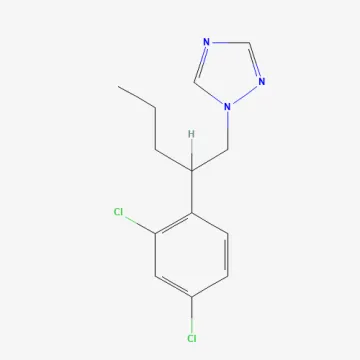
Description
Mode of action
Penconazole is a broad-spectrum triazole fungicide known for its excellent systemic, preventive, and curative properties.
It acts by inhibiting the biosynthesis of ergosterol, a fundamental component of the fungal cell membrane, which leads to the death of the pathogen.
The active ingredient is rapidly absorbed by the plant tissues and translocated systemically throughout the treated parts.
This movement ensures that new leaves and shoots are protected as they grow, providing a durable barrier against fungal infection.
By interfering with the development of mycelium, penconazole effectively stops the spread of diseases within the crop canopy.
What it targets
The primary application of penconazole is the control of powdery mildew, which affects various horticultural and field crops.
It is widely used in viticulture to protect grapevines and in orchards to manage diseases on pome fruits and stone fruits.
The fungicide also demonstrates efficacy against several other Ascomycetes and Basidiomycetes that impact vegetable production.
It helps maintain the plant's photosynthetic capacity by preventing leaf damage caused by fungal colonization.
Its use is particularly significant in regions with humid climates where fungal pathogens thrive throughout the growing season.
Rates and timing
Application rates for penconazole are determined by the specific crop type, the level of disease pressure, and regional agricultural practices.
It is generally applied as a foliar spray, ensuring thorough coverage of the foliage and stems to maximize efficacy.
The frequency of applications depends on the intensity of the disease and the speed of environmental degradation of the active substance.
Integrated pest management strategies often suggest limiting the number of applications per season to preserve the substance's efficacy.
Users must adhere strictly to the pre-harvest interval (PHI) to ensure that residue levels remain well below international safety standards.
Restrictions
To prevent the selection of resistant strains of pathogens, penconazole should be used in rotation with fungicides from different chemical classes.
Operators must wear appropriate personal protective equipment, including gloves and respirators, when handling the concentrated formulation.
Application during peak flowering periods should be avoided to protect non-target beneficial insects, such as pollinators.
The product must be stored in a cool, dry, and ventilated place, kept strictly away from water bodies to prevent environmental contamination.
Always follow the label instructions regarding dosage and water volume to achieve optimal disease control while minimizing chemical exposure.
Regulatory
Status in the European Union
Approved in the EU
- CAS number
- 66246-88-6
- Approved from
- 01.01.2010
- Approval until
- 15.10.2026
- ADI
- 0.03 mg/kg bw/day
- ARfD
- 0.5 mg/kg bw
- AOEL
- 0.03 mg/kg bw/day
Hazard classification (CLP)
Acute Tox. 4 - H302Aquatic Acute 1 - H400Aquatic Chronic 1 - H410Repr. 2 - H361d
EU legislation
EU status is for reference only and does not replace national registration in your country.
Content graph
Connections · Penconazole
Most often together:
Marketplace
Products · 17


Floristin
ТОВ «Фабрика агрохімікатів», Черкаси, Україна
Insecticides
0
0
·
68
21 offer
5.36 €per 1 l
Buy

Thiophen Extra
Санрайз Кемікалз Ко. Лтд., Шанхай, Китай
Fungicides
0
0
·
49
4 offers
13.76 €per 1 l
Buy

Thiophen Extra
Жеджианг Хебен Пестисайд енд Кемікалс Ко., Лтд., Китай
Fungicides
0
0
·
42
1 offer
21.89 €per 1 l
Buy

Jack Pot
ТОВ «Фабрика агрохімікатів», Черкаси, Україна
Fungicides
0
0
·
40
24 offers
5.23 €per 1 l
Buy


Thiophen Extra z.p.
Санрайз Кемікалз Ко. Лтд., Шанхай, Китай
Fungicides
0
0
·
37
4 offers
11.3 €per 1 l
Buy


FUNGICIDE JACK POT
ТОВ «Фабрика агрохімікатів», Черкаси, Україна
Fungicides
0
0
·
36
8 offers
19.2 €per 1 l
Buy


