

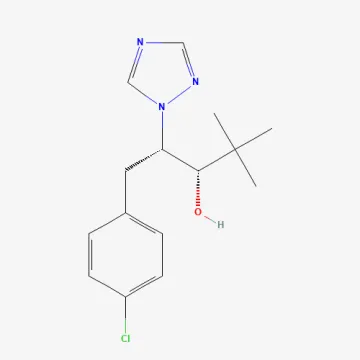
Description
Mode of action
Paclobutrazol belongs to the triazole chemical class. It functions primarily as a potent plant growth regulator (retardant) by inhibiting the biosynthesis of gibberellins.
The mechanism involves blocking the oxidation of ent-kaurene to ent-kaurenoic acid, which effectively halts the elongation of plant internodes and reduces vertical growth.
By shifting the energy balance of the plant, paclobutrazol promotes the development of stronger root systems and enhanced reproductive growth instead of excessive vegetative foliage.
Beyond its growth-regulating properties, it acts as an effective systemic fungicide, providing significant suppression of various plant pathogens, such as powdery mildew and rusts.
The substance is absorbed by plant tissues via roots or leaves, ensuring a long-lasting systemic effect that helps in managing plant shape and health simultaneously.
What it targets
In orchards, paclobutrazol is widely used to manage the canopy size of apple and pear trees, facilitating easier pruning and improving sunlight penetration to lower branches.
In floriculture and ornamental plant production, it is essential for producing compact, high-quality potted plants that are easier to transport and more attractive to consumers.
For cereal crops, the substance is applied to prevent lodging, which increases the structural strength of stems and protects the harvest from potential weather damage.
It is effective against a variety of fungal diseases, which allows growers to combine growth management with preventive disease control in a single application process.
The application of this substance improves the uniformity of plant growth, which is a critical factor for achieving consistent yield and product quality in intensive farming.
Rates and timing
Application rates for paclobutrazol vary significantly depending on the target plant species, the stage of development, and the chosen method of chemical delivery.
For fruit trees, timing is critical and applications are usually scheduled during the periods of rapid shoot growth to effectively manage the structural development of the tree.
Ornamental growers must be careful with dosage, as different varieties show varying sensitivity to triazoles, and over-application can result in undesirable stunting.
Field applications are determined by the specific agricultural requirements and weather conditions to ensure that the active ingredient reaches the site of action effectively.
- Use precise measuring equipment to ensure that the correct concentration is achieved during preparation.
- Avoid spraying in windy conditions to prevent drift and ensure even coverage across the target area.
Restrictions
Paclobutrazol exhibits high persistence in soil, meaning growers must carefully monitor the subsequent crop rotation to avoid potential residues affecting the next generation of plants.
Strict adherence to maximum dosage is mandatory, as excessive amounts can cause irreversible growth inhibition and severe economic losses for the grower.
Operators must wear appropriate personal protective equipment during handling and application to prevent absorption through the skin or inhalation of spray particles.
Treatment should be avoided on plants that are currently suffering from environmental stress, such as severe drought, nutrient deficiencies, or pest infestations.
Do not store diluted solutions for extended periods, as the active substance may lose stability and fail to provide the expected physiological effect on the crop.
Content graph
Connections · Paclobutrazol
Most often together:
Marketplace
Products · 4


Setera 375 SC
Сингента Агро С.А.С.,хутір Рувіллак, Аг-Вів, Франція.
Fungicides
0
0
·
51
4 offers
22.64 €per 1 l
Buy
