

Gold Star
ТОВ «Фабрика агрохімікатів», Черкаси, Україна
Herbicides
0
3
·
2.4K
18 offers
26.6 €per 1 l
Buy
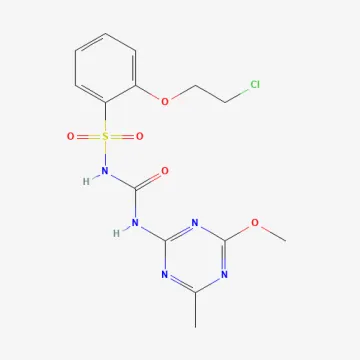
Triasulfuron is a systemic herbicide belonging to the sulfonylurea chemical class, widely used in professional agriculture for crop protection.
The mode of action involves the inhibition of the acetolactate synthase (ALS) enzyme, which is essential for the biosynthesis of branched-chain amino acids.
By blocking this specific enzyme, the product prevents plant cells from dividing, effectively stopping the development of susceptible weed species.
Absorption occurs through both the foliage and the root system, allowing the active ingredient to be translocated throughout the entire weed plant.
Crop selectivity is achieved because the protected cereal plants have the biological ability to rapidly metabolize the herbicide into inactive compounds.
This substance is primarily used to control a broad spectrum of broad-leaved weeds found in wheat, barley, and other cereal crops.
It is particularly effective against species such as Stellaria media, Chenopodium album, Polygonum spp., and various cruciferous weeds.
Triasulfuron also provides effective suppression of perennial weeds like Cirsium arvense, reducing their competitive impact during the crop's growth.
Its efficacy remains reliable under cool conditions, making it a preferred choice for early-season weed management in many temperate climates.
The product is often applied as part of an integrated weed management program to prevent the build-up of herbicide-resistant weed populations.
Application rates for triasulfuron typically range between 5 and 10 grams of active ingredient per hectare, depending on local field conditions.
The optimal timing for application is during the tillering stage of the cereal crop, while weeds are in the early stages of their growth cycle.
Using surfactants or adjuvants in the spray tank is often recommended to improve the adhesion and penetration of the herbicide into weed leaves.
Uniform distribution of the spray solution is critical to ensuring that all weeds receive an effective dose of the active substance.
Field monitoring after application is encouraged to assess the kill rate and determine if subsequent management steps are necessary.
Triasulfuron exhibits soil residual activity, which requires careful planning of crop rotations to avoid potential damage to sensitive follow-on crops.
Soil pH levels significantly influence the persistence of the herbicide, with alkaline soils potentially delaying degradation and increasing risks.
Farmers should avoid planting highly sensitive crops like sugar beets or oilseed rape in fields treated with triasulfuron in the previous season.
Personal protective equipment (PPE), including gloves and respiratory protection, is mandatory when handling and applying this chemical compound.
Drift management is essential to protect non-target plants, especially nearby broad-leaved crops that are highly sensitive to sulfonylurea herbicides.


