
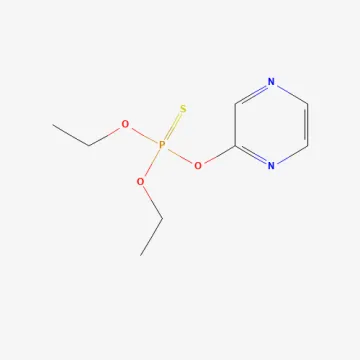
Thionazin
Description
Mode of action
Thionazin is an organophosphate compound that functions primarily as a systemic insecticide and nematocide. It acts by inhibiting the enzyme acetylcholinesterase, which is essential for the normal nervous system function of insects and nematodes.
Due to its systemic nature, thionazin is absorbed by the plant roots and translocated throughout the tissues, providing a protective barrier against pests that feed on plant sap or roots. This allows for long-lasting efficacy within the plant body.
The chemical exhibits strong fumigant properties, allowing it to diffuse through soil pores. This characteristic is crucial for reaching and eliminating pests hidden deep within the root zone, where contact insecticides would fail to penetrate.
Once the pest is exposed to the compound, it disrupts nerve signal transmission, leading to paralysis and death. The speed and effectiveness of this process depend on environmental factors such as soil temperature and moisture levels.
The metabolism of thionazin involves oxidation within the plant, which generates active derivatives that enhance the residual protective effect, ensuring that the crop remains shielded for several weeks after application.
What it targets
Thionazin is primarily used to control phytopathogenic nematodes, including root-knot, stem, and bulb nematodes, which pose a significant threat to various agricultural and ornamental crops.
In addition to its nematocidal activity, it is effective against a wide range of soil-dwelling insects, such as wireworms and other larval stages of beetles that attack the root systems of young plants.
It is commonly applied to high-value crops like potatoes, strawberries, onions, and greenhouse-grown tomatoes. It serves as an essential tool in nurseries to prevent the spread of soil-borne infestations.
The chemical is also utilized for pre-planting treatments of bulbs, corms, and rhizomes, which helps in preventing the introduction of harmful nematode populations into clean planting sites or propagation areas.
By targeting both ectoparasitic and endoparasitic nematode forms, thionazin provides a comprehensive solution for soil sanitization in intensive farming systems, helping to reduce economic losses due to pest damage.
Rates and timing
Application rates for thionazin are determined by soil composition, the target pest species, and the level of infestation. Precise dosage is essential to achieve effective control while avoiding unnecessary chemical load on the environment.
The substance is typically applied to the soil before planting, either through specialized injection equipment or via drip irrigation systems, ensuring a uniform distribution within the rhizosphere.
The timing of the application is critical; it is most effective when the soil is warm (typically above 15-18°C), which encourages pest activity and facilitates the movement of the fumigant through the soil matrix.
Soil structure plays a significant role in application; heavy or high-organic-matter soils may require higher doses due to the adsorption of the active ingredient onto soil particles, which can reduce its bioavailability.
Users should always follow the manufacturer's recommendations regarding the interval between application and planting, as young plant roots can be sensitive to high concentrations of the pesticide.
Restrictions
Thionazin is highly toxic and requires strict adherence to safety protocols. Operators must wear full personal protective equipment, including respiratory and skin protection, to prevent accidental exposure.
There are strict regulatory requirements for pre-harvest intervals. Failure to comply can result in residues exceeding safety limits, which poses health risks to consumers and legal consequences for the grower.
Environmental safety is paramount; thionazin should never be applied near water bodies, as it is hazardous to aquatic life. Proper drainage management is necessary to prevent runoff from treated areas.
It is crucial to avoid improper disposal of empty containers and chemical leftovers. These materials must be handled as hazardous agricultural waste and disposed of according to local environmental regulations.
Incompatible mixing with other chemicals can lead to phytotoxicity or reduced effectiveness. Always perform a compatibility test before tank-mixing thionazin with fertilizers or other pesticides.
Status in the European Union
Not approved in the EU
- CAS number
- 297-97-2
- Category (EU)
- NE - Nematicide
EU status is for reference only and does not replace national registration in your country.