
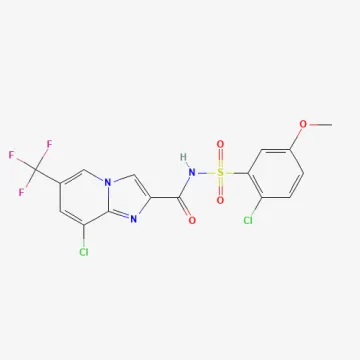
Fluazaindolizine
Description
Mode of action
Fluazaindolizine is a novel active ingredient belonging to the fluoroalkyl-sulfonamide chemical class, engineered specifically for the management of plant-parasitic nematodes.
Its mechanism of action involves highly targeted interference with the biological functions of nematodes, effectively inhibiting their motility and preventing their ability to penetrate host roots.
Upon application to the soil, the substance is absorbed by the root system, where it establishes a persistent protective zone that serves as a shield against nematode infestations.
This systemic protection is particularly valuable during the early stages of plant growth, ensuring that young crops can develop a healthy, undamaged root system.
The compound is characterized by its high selectivity, meaning it provides effective pest control while maintaining a favorable profile for beneficial soil microbial communities.
What it targets
The primary targets for fluazaindolizine are parasitic nematode species, particularly those from the Meloidogyne genus (root-knot nematodes) that cause significant yield loss.
These pests induce the formation of root galls, which disrupt the plant's ability to take up water and essential nutrients, leading to stunted growth and premature wilting.
Fluazaindolizine also exhibits efficacy against a variety of other soil-borne nematodes that cause root lesions and predispose plants to secondary infections by soil fungi.
Typical applications include high-value vegetable crops, such as tomatoes, peppers, and cucumbers, grown in both greenhouse and open-field environments.
By controlling these subterranean threats, the use of this nematicide significantly improves plant vigor and potential for maximizing crop yield.
Rates and timing
Fluazaindolizine is typically applied via drip irrigation systems or direct soil drenching, which ensures that the product reaches the root zone with high precision.
Application rates are determined based on the nematode pressure observed in soil samples, requiring careful diagnostic monitoring prior to the season.
The timing of application is critical, with optimal results achieved when the product is applied early in the planting cycle to safeguard the vulnerable root development period.
Soil moisture levels must be properly managed during and after application to facilitate the uniform distribution of the active ingredient through the soil profile.
- Ensure soil analysis is conducted to determine the necessity and timing of treatments.
- Strictly follow label instructions regarding re-entry intervals and harvest safety periods.
- Avoid over-application to ensure the safety of the treated crops.
Restrictions
Strict adherence to safety protocols is mandatory when handling fluazaindolizine; operators must use appropriate personal protective equipment (PPE) at all times.
The substance is classified as toxic to aquatic organisms, and therefore all necessary precautions must be taken to prevent run-off into surface water bodies.
Storage should be restricted to secure, ventilated, and clearly labeled areas, strictly separated from human food, animal feed, and potable water sources.
Compatibility testing is highly recommended before tank-mixing with other pesticides to prevent chemical degradation or adverse reactions.
Disposal of empty containers and leftover solutions must comply with local environmental regulations and professional waste management standards.
Status in the European Union
Pending
- CAS number
- 1254304-22-7
- Category (EU)
- NE - Nematicide
EU status is for reference only and does not replace national registration in your country.