
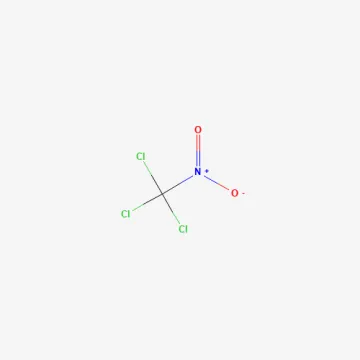
Chloropicrin
Description
Mode of action
Chloropicrin is a highly active, broad-spectrum fumigant belonging to the halogenated hydrocarbon class. Physically, it is a volatile, oily liquid that converts into a gaseous state once applied to the soil.
The mechanism of action relies on the substance's ability to penetrate soil pores and disrupt the cellular respiration of pathogens. The gas inhibits vital enzymatic processes, leading to the rapid destruction of harmful organisms.
Due to its high vapor density, chloropicrin effectively fills the voids within the soil structure, ensuring thorough treatment of the soil horizon.
The substance possesses strong phytotoxic properties, which is why its use is strictly limited to soil preparation periods prior to planting or sowing crops.
It is valued for its ability to degrade rapidly in the soil, which, provided that application protocols are strictly followed, ensures no harmful residues remain in the harvest.
What it targets
The product is primarily used to combat soil-borne pathogens, including fungal infections such as Fusarium and Verticillium wilt.
It is effective against a wide range of nematodes that attack the root systems of various vegetable and fruit crops.
It is utilized to control harmful insects and larvae inhabiting deep soil layers that are difficult to reach with conventional contact insecticides.
Chloropicrin acts as a tool for weed control, suppressing the germination of most weed species present in the soil seed bank.
Usage of this product is critical in intensive farming, particularly in greenhouse operations, to prevent soil fatigue and disease buildup.
Rates and timing
Application rates for chloropicrin depend significantly on soil type, moisture levels, temperature, and specific agricultural objectives.
The application is performed using specialized fumigation equipment at depths ranging from 15 to 30 cm, followed by immediate soil compaction.
After application, the soil surface is often sealed with plastic film to retain the gas and enhance the efficacy of the fumigation process.
Waiting periods before sowing or planting range from 2 to 4 weeks to allow for the complete dissipation of the gas from the soil layers.
Maintaining optimal soil moisture (50-70% of field capacity) is a crucial requirement to ensure proper gas distribution and effectiveness.
Restrictions
Chloropicrin is a highly toxic substance; therefore, only trained personnel equipped with proper respiratory and skin protection are permitted to handle it.
Usage near residential areas, schools, or open water bodies is strictly prohibited due to its high volatility and potential for harmful exposure.
Equipment used for application must be strictly monitored for leaks to prevent gas escape into the atmosphere during operation.
Exceeding recommended dosages is unacceptable, as it may cause long-term suppression of beneficial soil microflora and ecological imbalance.
Before large-scale operations, verifying the integrity of the soil seal and establishing safety exclusion zones around treated areas is mandatory.
Status in the European Union
Not approved in the EU
- CAS number
- 76-06-2
- Category (EU)
- NE - Nematicide
- ADI
- 0.001 mg/kg bw/day
- ARfD
- 0.001 mg/kg bw
- AOEL
- 0.001 mg/kg bw/day
EU status is for reference only and does not replace national registration in your country.