
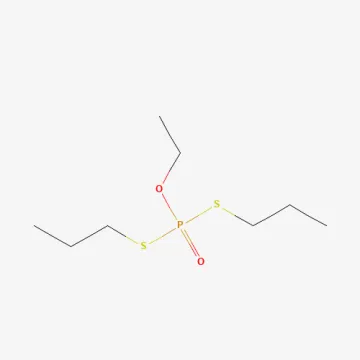
Ethoprophos
Description
Mode of action
Ethoprophos belongs to the organophosphate chemical class and functions as a non-systemic soil-applied contact nematicide and insecticide.
The mode of action involves the irreversible inhibition of the enzyme acetylcholinesterase, leading to the accumulation of acetylcholine at the nerve synapses.
This biochemical interruption results in the paralysis and death of nematodes, wireworms, and other soil-dwelling larvae that come into contact with the treated soil.
Because the compound does not exhibit systemic translocation within the plant, it acts exclusively as a chemical barrier in the rhizosphere, shielding roots from external attacks.
The stability of the compound in the soil ensures a persistent protective effect, crucial for seedlings and young plants during their most vulnerable growth stages.
What it targets
Ethoprophos is primarily used to control a broad spectrum of soil pests, including sedentary and migratory plant-parasitic nematodes like Meloidogyne and Globodera species.
It is highly effective against wireworms (Elateridae larvae), which are notorious for boring into tubers, bulbs, and primary root systems of various crops.
The substance also targets other soil insects, such as symphylids and specific beetle larvae that reside in the topsoil and damage subterranean plant parts.
Effective pest control with this agent prevents mechanical damage to roots, which significantly reduces the incidence of secondary fungal and bacterial infections.
It is widely utilized in professional agriculture for high-value crops where soil-borne pest damage can lead to total yield loss or severe quality degradation.
Rates and timing
Application rates for Ethoprophos are precisely calculated based on the infestation density of the specific soil pest and the agronomic requirements of the target crop.
The product is applied directly to the soil using mechanical injectors or granule applicators, ensuring the chemical is incorporated into the seed furrow or planting row.
Incorporation into the soil must be carried out immediately after application to minimize volatility and optimize the contact with the pest population.
Users must adhere strictly to the recommended dosages to avoid phytotoxic effects on sensitive crops and to minimize environmental impact.
Waiting periods between application and harvest must be rigorously observed to ensure the final produce meets all safety and regulatory residue standards.
Restrictions
Ethoprophos is classified as a highly toxic substance, and its handling requires strict adherence to safety protocols, including the use of certified protective equipment.
The application of this substance near aquatic ecosystems is strictly prohibited due to its high toxicity to aquatic invertebrates and fish species.
Application on soils with high organic matter or clay content may require adjustments in rates due to potential binding effects that can reduce the bioavailability of the chemical.
Environmental protection measures are mandatory, and containers must be disposed of according to local regulations to prevent contamination of groundwater or soil.
It is recommended to rotate the use of this substance with other pest control methods as part of an Integrated Pest Management (IPM) strategy to delay pest resistance.
Status in the European Union
Not approved in the EU
- CAS number
- 13194-48-4
- Category (EU)
- NE - Nematicide
- Approved from
- 01.10.2007
- Approval until
- 21.03.2019
- ADI
- Not appl.
- ARfD
- Not appl.
- AOEL
- Not appl.
EU status is for reference only and does not replace national registration in your country.