
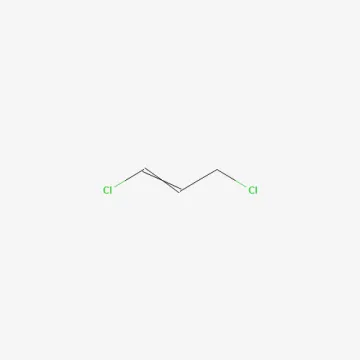
1,3-dichloropropene
Description
Mode of action
1,3-dichloropropene belongs to the class of halogenated aliphatic hydrocarbons and serves as a highly effective soil fumigant. Its action relies on its ability to transition into a gaseous state, penetrating soil pores and surrounding the root systems of crops.
The mechanism of action involves the alkylation of enzymes and proteins within pest organisms. This process leads to the rapid disruption of vital metabolic functions, resulting in the death of pathogens upon contact with the chemical vapors.
The substance impacts the nervous system of soil-dwelling organisms, exerting a paralyzing effect. Due to its high volatility, the compound spreads rapidly throughout the soil profile immediately following application.
To ensure maximum fumigation efficacy, the soil must possess optimal moisture and temperature levels. In overly dry or saturated soil, gas exchange is impeded, which reduces the penetration capacity of the chemical.
After applying the product, it is essential to seal the soil surface by compaction or covering with plastic film. This prevents the premature escape of the active ingredient into the atmosphere and maintains the necessary gas concentration where nematodes reside.
What it targets
The primary use of 1,3-dichloropropene-based products is to control phytopathogenic nematodes. This includes a wide range of pests such as root-knot, cyst-forming, and free-living nematodes.
These products effectively suppress the development of soil-dwelling insects, including wireworms, mole crickets, and other species residing in the upper soil layers.
In addition to its nematicidal activity, the substance can suppress the growth of certain soil-borne fungi and weed seeds, making it a comprehensive tool for pre-plant soil disinfection.
It is primarily used on high-value crops with high susceptibility to soil pests, where the risk of significant yield loss due to root damage is extremely critical.
- Potatoes and vegetable crops (tomatoes, peppers, cucumbers).
- Industrial crops (sugar beets, tobacco).
- Fruit orchards and vineyards during site preparation.
Rates and timing
Timing of application is strictly linked to agricultural stages and is performed several weeks before planting. A waiting period of 2 to 4 weeks is typically required to allow the gas to fully dissipate, preventing injury to young roots.
Application rates vary depending on soil type, mechanical composition, and the severity of pest infestation. Higher doses are usually required in heavy clay soils due to the increased resistance to gas penetration.
Application is performed using specialized machinery known as fumigant applicators, which inject the liquid to a specific depth in the soil. Maintaining uniform distribution is critical to avoid creating untreated zones where pests can survive.
The temperature range for application is between 5 and 25 degrees Celsius. At temperatures below 5 degrees, evaporation slows down, while at high temperatures, the gas dissipates too rapidly to be effective.
After treatment, it is recommended to avoid deep tillage or disturbance of the soil for a specific period to preserve the integrity of the treated soil layer.
Restrictions
The substance is extremely phytotoxic, and therefore, application is strictly prohibited in the presence of growing crops. Soil analysis before planting is mandatory to ensure all gas residues have cleared, avoiding stunted crop growth.
Strict adherence to safety protocols is required when handling 1,3-dichloropropene. The use of personal protective equipment for the respiratory tract, skin, and eyes is essential, as the substance is an irritant and potentially hazardous.
Prevention of chemical runoff into water bodies is critical due to high toxicity to aquatic life. Buffer zones must be strictly maintained around residential areas and drinking water sources.
Storage must occur in airtight containers in a cool, well-ventilated location, inaccessible to unauthorized persons. Empty containers must be disposed of in accordance with environmental regulations.
Work must not be performed during high winds to prevent the drift of the evaporating fumigant toward neighboring properties or personnel rest areas.
Status in the European Union
Not approved in the EU
- CAS number
- See note
- Category (EU)
- NE - Nematicide
EU status is for reference only and does not replace national registration in your country.