
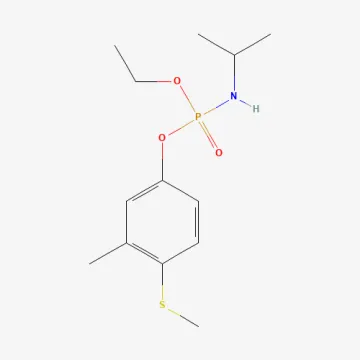
Fenamiphos
Description
Mode of action
Fenamiphos is a potent systemic organophosphate compound primarily used as a nematicide. It works through both contact and ingestion, providing broad-spectrum protection.
The mechanism of action involves the inhibition of the enzyme acetylcholinesterase in the pest's nervous system, leading to rapid paralysis and death of the target organism.
As a systemic agent, it is absorbed by the plant roots and translocated throughout the plant tissues, safeguarding the host from nematode penetration and subsequent damage.
The chemical provides a long-lasting protective zone in the rhizosphere, which effectively prevents the buildup of nematode populations in the soil during critical growth stages.
Compared to volatile fumigants, fenamiphos formulations are designed to be stable in the soil, allowing for targeted application and a reduced environmental footprint in terms of air quality.
What it targets
Fenamiphos is widely used to manage infestations of endoparasitic and ectoparasitic nematodes that compromise the root systems of various crops.
It is specifically effective against root-knot, lesion, and stem nematodes that cause severe yield losses in vegetable, fruit, and ornamental plant production.
Beyond its primary nematicidal activity, it also provides control against various soil-dwelling insects, such as grubs and other soil-borne larvae that feed on germinating seeds.
The compound is essential in high-intensity farming environments where soil-borne parasites are the limiting factor for crop health and economic viability.
- Root-knot nematodes (Meloidogyne spp.)
- Stem and bulb nematodes (Ditylenchus spp.)
- Cyst nematodes (Heterodera spp.)
- General soil-borne pests
Rates and timing
Application rates are determined by the soil type, organic matter content, and the specific level of nematode pressure present in the field or greenhouse.
Granular formulations must be incorporated into the soil surface to the depth of the root zone immediately after application to ensure uniform distribution and maximum efficiency.
In greenhouses, application via drip irrigation systems is common, which allows for precise dosing and minimized worker exposure during the treatment process.
Due to the persistence of the active ingredient, strict pre-harvest intervals must be followed to ensure that no harmful residues remain in the edible parts of the plant.
Agronomists advise planning soil treatments well in advance of sowing or transplanting to ensure that the chemical concentration has stabilized for optimal crop safety.
Restrictions
Fenamiphos is classified as highly toxic to humans, wildlife, and non-target organisms, necessitating strict adherence to protective equipment protocols during handling and application.
The compound is strictly prohibited from use near water sources or in sensitive ecosystems due to its potential to contaminate groundwater and aquatic habitats.
Resistance management is crucial; users should rotate fenamiphos with alternative nematicide classes to prevent the selection of resistant nematode populations.
Environmental regulations require proper disposal of chemical containers and unused product through certified hazardous waste management channels.
Storage facilities must be secure, well-ventilated, and clearly marked to prevent unauthorized access and to mitigate the risks associated with accidental exposure or spills.
Status in the European Union
Not approved in the EU
- CAS number
- 22224-92-6
- Category (EU)
- NE - Nematicide
- Approved from
- 01.08.2007
- Approval until
- 23.09.2020
- ADI
- 0.0008 mg/kg bw/day
- ARfD
- 0.0025 mg/kg bw
- AOEL
- 0.0008 mg/kg bw/day
EU status is for reference only and does not replace national registration in your country.