

Description
Mode of action
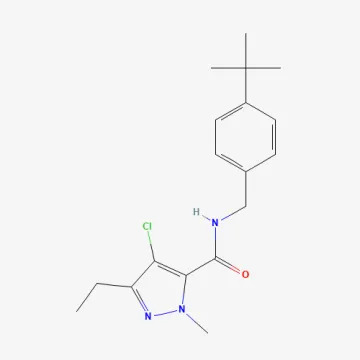
Tebufenpyrad belongs to the chemical class of pyrazoles. This highly effective active ingredient acts as a powerful acaricide and insecticide with contact and stomach action.
The mode of action is based on the inhibition of electron transport in the mitochondria of pests by blocking complex I (NADH-dehydrogenase). This leads to the immediate cessation of respiratory processes and subsequent death of the insect or mite.
The product shows a pronounced "knock-down effect," where pests stop feeding almost immediately after coming into contact with the treated plant surface.
The substance is characterized by translaminar activity, which allows it to penetrate leaf tissues and affect pests located on the underside of the leaf blade.
Tebufenpyrad is effective at all motile developmental stages of pests, including larvae, nymphs, and adults, which significantly reduces the overall population after a single application.
What it targets
The main purpose of tebufenpyrad is the control of a wide spectrum of phytophagous mites (spider mites, gall mites, brown mites) on various crops.
The substance also exhibits secondary insecticidal activity against whiteflies, thrips, aphids, and some species of leafhoppers, which expands its utility in integrated pest management systems.
It is used on crops such as apples, pears, grapes, open and closed-ground vegetables, as well as ornamental flowering plants.
Rates and timing
Application timing for tebufenpyrad is linked to the economic threshold of damage: treatments are carried out upon the first signs of mite emergence or during mass population outbreaks.
Application rates vary depending on the crop and level of infestation, typically ranging from 0.5 to 1.0 liters (or kg) of the formulated product per hectare, depending on the active ingredient concentration.
It is crucial to ensure maximum coverage of the leaf canopy with the working solution, as the contact action of the substance requires direct contact with the pest.
Restrictions
Tebufenpyrad is moderately toxic to bees, so the application of products based on it is strictly restricted or prohibited during the flowering period of crops.
It is recommended to rotate the use of tebufenpyrad with acaricides from other chemical classes to prevent the development of mite resistance.
During operation, it is necessary to use personal protective equipment for skin, respiratory organs, and eyes, avoiding spray drift to adjacent areas and water bodies.
Products based on this substance should be stored in their original packaging, away from feed and food, in areas with restricted access for unauthorized persons.
Regulatory
Status in the European Union
Approved in the EU
- CAS number
- 119168-77-3
- Category (EU)
- AC - Acaricide
- Approved from
- 01.11.2009
- Approval until
- 31.01.2027
- ADI
- 0.01 mg/kg bw/day
- ARfD
- 0.02 mg/kg bw
- AOEL
- 0.01 mg/kg bw/day
Hazard classification (CLP)
Acute Tox. 3 - H301Acute Tox. 4 - H332Aquatic Acute 1 - H400Aquatic Chronic 1 - H410STOT RE 2 - H373Skin Sens. 1B - H317
EU status is for reference only and does not replace national registration in your country.
Content graph
Connections · Tebufenpyrad
Most often together:
Marketplace
Products · 2
