
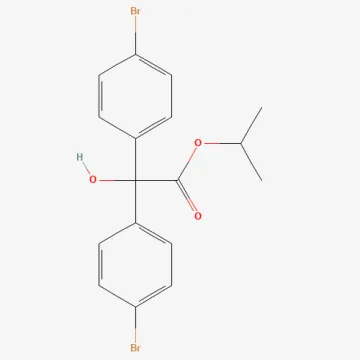
Bromopropylate
Description
Mode of action
Bromopropylate is a chemical substance classified as an ester of benzilic acid, functioning primarily as a contact acaricide in agricultural pest control programs.
The mechanism of action involves disrupting the nervous system of mites, leading to rapid paralysis, feeding cessation, and ultimately the death of the pest.
As a contact-based pesticide, it does not translocate systemically within the plant, requiring thorough spray coverage to achieve the desired control of mite populations.
It is known for its relatively stable performance on plant surfaces, providing a residual effect that helps protect foliage from rapid re-infestation after application.
The compound is particularly effective at hitting mobile developmental stages of mites, effectively reducing their presence within treated orchards and field crops.
What it targets
Bromopropylate is designed to target plant-feeding mites, specifically members of the Tetranychidae family, including the common spider mite and other related species.
It provides reliable protection for a wide range of horticultural crops, such as pome fruits, citrus, vines, and various greenhouse-grown vegetables that are prone to mite damage.
By controlling these pests, the substance prevents severe physiological damage to leaves, which is critical for maintaining healthy photosynthesis and yield production.
It is often used as a resistance management tool, effectively controlling populations of mites that have become resistant to other common acaricide classes.
The product is essential in Integrated Pest Management (IPM) where quick suppression of mite outbreaks is required to prevent widespread crop losses.
Rates and timing
The application rate for bromopropylate is determined by the specific crop type, the density of the foliage, and the infestation level present in the field or orchard.
Proper calibration of spraying equipment is essential to ensure that the entire canopy is evenly treated, focusing specifically on the underside of leaves where mites congregate.
Applications should be timed to match the economic threshold of the pest, ensuring that the treatment is applied when population density is most vulnerable.
Due to the biology of mites, repeat applications may be necessary to target subsequent generations, especially if the initial treatment does not fully eliminate egg batches.
Users must adhere to the dosage instructions provided on the label to maximize the effectiveness of the acaricide and ensure sustainable use of the chemical product.
Restrictions
Strict safety precautions are required when handling bromopropylate, including the use of appropriate personal protective equipment like gloves, masks, and goggles.
Users must be careful to prevent runoff into water bodies, as the substance poses a potential risk to aquatic life and must be kept away from streams and ponds.
Observing pre-harvest intervals is mandatory to ensure that the produce remains safe for consumption, as stipulated by international food safety regulations.
Storage should be conducted in secure, well-ventilated areas, ensuring that the chemical is kept in its original packaging away from heat and moisture sources.
Consult local regulations before application to confirm current registration status and specific regional environmental restrictions related to the use of this substance.
Status in the European Union
Not approved in the EU
- CAS number
- 18181-80-1
- Category (EU)
- AC - Acaricide
EU status is for reference only and does not replace national registration in your country.