
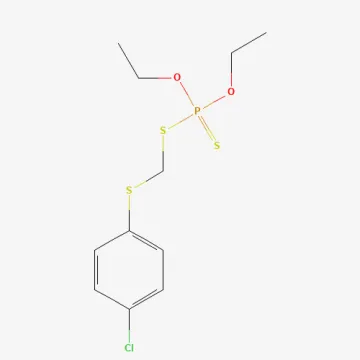
Carbophenothion
Description
Mode of action
Carbophenothion is a classic organophosphate insecticide and acaricide. It acts primarily through contact and ingestion, making it highly effective against various arthropod pests in agricultural systems.
The mode of action is based on the inhibition of acetylcholinesterase, a critical enzyme for nerve function in insects and mites. By preventing the breakdown of acetylcholine, the chemical leads to neurotoxicity, paralysis, and death.
The compound exhibits high lipophilicity, which allows it to penetrate the waxy cuticle of pests efficiently. This facilitates rapid absorption and contributes to its overall insecticidal performance in the field.
Once applied to plant surfaces, carbophenothion provides a significant residual effect. This persistence helps protect crops from subsequent re-infestation of pests during the growing season.
Due to its chemical stability, the substance is resistant to degradation by sunlight and remains active on foliage, maintaining its protective coverage under various environmental conditions.
What it targets
Carbophenothion has a broad spectrum of activity against both sucking and chewing pests. It has been historically utilized for managing infestations in diverse crop types.
Typical target pests include:
- Mites, including Tetranychidae species that cause foliage damage.
- Aphids, leafhoppers, and various species of whiteflies.
- Larvae of certain lepidopteran species that feed on crops.
- Various pests affecting citrus and pome fruit orchards.
Because of its dual nature as an insecticide and acaricide, it is a versatile tool for managing multi-species infestations in fruit and industrial crops.
It has seen application in crops such as cotton, pome fruits like apples and pears, and various grain crops, helping to prevent extensive leaf damage and yield loss.
By effectively targeting the nervous systems of these organisms, carbophenothion helps maintain plant vigor and overall agricultural productivity during heavy pest pressure.
Restrictions
Carbophenothion is classified as a highly toxic substance to humans and other mammals. Strict adherence to safety protocols and the use of full personal protective equipment (PPE) are mandatory during application.
Operators must avoid all skin contact and inhalation of vapors. Proper decontamination procedures after spraying are essential to prevent accidental poisoning or exposure.
The substance is extremely hazardous to non-target organisms, particularly bees and beneficial insects. Application during bloom or in areas with active pollinators is prohibited to prevent ecological damage.
Pre-harvest intervals (PHI) are strictly enforced to ensure that residues on the final produce remain below established safety levels, protecting public health.
In many modern jurisdictions, the use of carbophenothion is heavily restricted or phased out due to its persistence in the environment and toxicity profile compared to modern alternatives.
Status in the European Union
Not approved in the EU
- CAS number
- 786-19-6
- Category (EU)
- AC - Acaricide
- ADI
- 0.0005 mg/kg bw/day
EU status is for reference only and does not replace national registration in your country.