
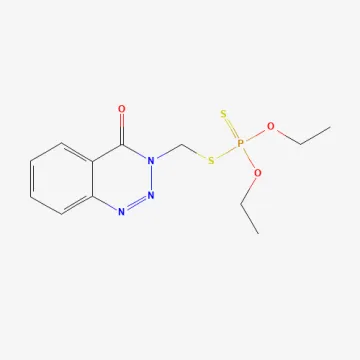
Azinphos-ethyl
Description
Mode of action
Azinphos-ethyl belongs to the organophosphate chemical class and functions as a broad-spectrum insecticide and acaricide with contact and stomach action. Its chemical structure is highly effective at penetrating insect cuticles.
The mode of action involves the inhibition of the enzyme acetylcholinesterase within the insect nervous system. This causes an accumulation of acetylcholine, leading to continuous nerve impulses, paralysis, and death.
This substance is known for its long-lasting residual effect on plant surfaces, providing an extended window of protection. It remains active under a variety of environmental conditions, ensuring consistent pest control.
It is primarily effective through direct contact with the pest or ingestion of treated plant tissues. Its ability to work across different temperatures makes it a reliable choice for diverse growing regions.
Azinphos-ethyl is capable of controlling both adult insects and their larval stages. This efficacy helps to disrupt pest life cycles effectively, preventing the rapid development of large populations in crops.
What it targets
Azinphos-ethyl is used to manage a wide array of pests in fruit, vegetable, and industrial crops. Major targets include aphids, leafrollers, codling moths, and various mite species.
The insecticide is particularly useful for controlling pests that reside in hidden parts of the plant, such as rolled leaves or inside fruit, due to its physical properties.
In intensive orchard management, this substance is often utilized to suppress populations that have become resistant to other chemical control agents. It is a key tool in maintaining the health of vineyards and commercial orchards.
It also provides significant protection against weevils and other beetles that damage the reproductive structures of crops. Its application is crucial for preventing substantial yield loss in vulnerable plantations.
To avoid the selection of resistant pest populations, it is strongly advised to rotate Azinphos-ethyl with insecticides from different chemical groups as part of an integrated pest management strategy.
Restrictions
Azinphos-ethyl is highly toxic to mammals, bees, and other beneficial insects. Strict adherence to safety protocols and the use of appropriate personal protective equipment are mandatory during application.
The substance poses a significant risk to aquatic ecosystems. Application near water bodies or runoff areas is prohibited to prevent lethal contamination of fish and aquatic organisms.
To protect honeybees, avoid spraying during the flowering stages of crops. Treatments should be performed outside of foraging hours, typically during early morning or evening periods.
Farmers must strictly observe the pre-harvest interval (PHI) as specified on the product label. This ensures that no harmful chemical residues remain in the harvest intended for consumption.
Storage of the chemical must be in secure, labelled, and locked facilities. Proper disposal of empty containers and unused chemical residues must follow local environmental and hazardous waste regulations.
Status in the European Union
Not approved in the EU
- CAS number
- 2642-71-9
- Category (EU)
- AC - Acaricide
EU status is for reference only and does not replace national registration in your country.