
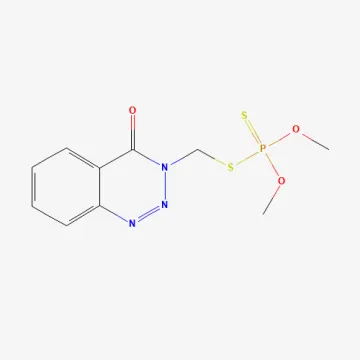
Azinphos-methyl
Description
Mode of action
Azinphos-methyl is an organophosphate insecticide and acaricide with broad-spectrum contact and stomach activity. It acts primarily by targeting the nervous system of arthropods.
The mode of action involves the inhibition of the enzyme acetylcholinesterase. This leads to the accumulation of acetylcholine at the nerve endings, resulting in continuous nervous stimulation, paralysis, and the death of the pest.
The compound is recognized for its quick "knock-down" effect, allowing for rapid control of pest populations in fields and orchards shortly after application.
Due to its chemical stability, Azinphos-methyl provides a long residual effect on treated plant surfaces, offering protection against re-infestation for an extended period.
It is effective against various stages of insect development, including larvae and adults, provided that the timing of application aligns with the pest life cycle.
What it targets
Azinphos-methyl is utilized to control a wide range of pests in agriculture, including fruit trees, vegetables, and field crops. It is highly effective against chewing and sucking insects.
Common targets include codling moths, leafrollers, scales, mealybugs, and various species of mites that cause significant damage to foliage and fruit quality.
The insecticide is also used to manage populations of weevils, beetles, and certain lepidopteran species that threaten crop health and yield stability.
By effectively targeting multiple pest groups, it remains a key tool in traditional pest management strategies for various high-value horticultural crops.
The versatility of this substance allows it to be used in various settings, protecting both vegetative parts of the plants and developing fruits from economic damage.
Rates and timing
Application rates for Azinphos-methyl are highly dependent on the target pest, the crop type, and the intensity of the infestation level. Always refer to specific product labels for dosage.
The timing of treatment is critical and should be based on scouting reports or historical pest population trends to ensure the application is made when pests are most vulnerable.
Achieving uniform coverage is essential for performance, as the chemical relies on contact activity. Proper calibration of spraying equipment is a fundamental requirement.
Due to the risk of resistance, rotation with other insecticide classes is strongly recommended, and the number of applications per season is typically limited by regulatory standards.
Strict adherence to pre-harvest intervals is necessary to ensure that residues on the final product are within safe and legally permitted levels for consumption.
Restrictions
Azinphos-methyl is highly toxic to humans, wildlife, honeybees, and aquatic organisms. Strict handling protocols are required to minimize environmental and health risks.
Full personal protective equipment (PPE), including chemical-resistant suits, gloves, and respirators, is mandatory during the preparation and application of the insecticide.
Application must be avoided in conditions that favor drift toward residential areas, bee-hives, or water bodies to prevent contamination and harm to non-target species.
Many jurisdictions have placed severe restrictions or outright bans on the use of Azinphos-methyl due to its toxicity and environmental impact profiles.
Storage must be handled in secure, ventilated, and dry locations, kept away from food, feed, and water supplies, and clearly labeled according to local safety regulations.
Status in the European Union
Not approved in the EU
- CAS number
- 86-50-0
- Category (EU)
- AC - Acaricide
EU status is for reference only and does not replace national registration in your country.