
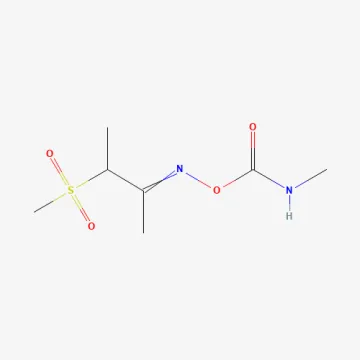
Butoxycarboxim
Description
Mode of action
Butoxycarboxim belongs to the chemical class of oxime carbamates, acting as a potent systemic insecticide with both contact and stomach poison effects.
The primary mechanism of action involves the inhibition of the acetylcholinesterase enzyme, which disrupts normal nerve impulse transmission in the target insects.
Once applied, the substance is absorbed into the plant tissues and translocated through the xylem and phloem, providing comprehensive protection to the plant.
This systemic property ensures that even hidden pests, which are not reached by direct spraying, are effectively controlled upon feeding on the plant tissue.
The biological efficacy remains stable across various environmental conditions, making it a reliable component in integrated pest management programs.
What it targets
This insecticide is highly effective against a variety of sucking pests that cause economic damage to agricultural and ornamental crops.
It is specifically recommended for controlling aphids, which act as vectors for numerous plant viruses that drastically reduce crop quality.
The substance shows high performance against whiteflies in greenhouse environments, where populations can build up very rapidly.
Additionally, it is used to manage infestations of thrips and various species of mites that colonize plant foliage and inflorescences.
- Aphids (Aphididae)
- Whiteflies (Aleyrodidae)
- Thrips (Thysanoptera)
- Mites (Tetranychidae)
Rates and timing
The dosage of the product depends on the type of crop, the severity of the pest infestation, and the specific application method chosen by the grower.
Foliar spraying should be performed with calibrated equipment to ensure full and uniform coverage of the plant surface for optimal uptake.
Soil application or drenching allows for root uptake, which provides a long-lasting systemic barrier against early-season pest colonization.
Operators must adhere strictly to the pre-harvest interval (PHI) to ensure that the final product meets all regulatory safety standards.
Re-treatment schedules should be planned based on scouting data to minimize the selection pressure and prevent resistance development.
Restrictions
Butoxycarboxim is toxic to bees and other beneficial insects; therefore, application during the flowering stage is strictly prohibited.
Personal protective equipment (PPE), including gloves, goggles, and respiratory masks, must be worn at all times during the handling of the chemical.
Environmental precautions must be taken to prevent runoff into aquatic ecosystems, as the substance can be harmful to fish and other aquatic life.
Storage must be maintained in a cool, dry, and secure facility that is inaccessible to unauthorized personnel, children, and livestock.
Care must be taken to prevent drift to non-target areas or sensitive crops that may exhibit phytotoxic symptoms upon exposure.
Status in the European Union
Not approved in the EU
- Category (EU)
- AC - Acaricide
EU status is for reference only and does not replace national registration in your country.