
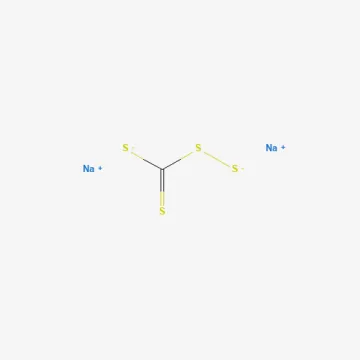
Sodium tetrathiocarbonate
Description
Mode of action
Sodium tetrathiocarbonate belongs to the dithiocarbamate chemical class and acts as a potent soil fumigant designed to sanitize agricultural land.
When applied to moist soil, the active ingredient undergoes rapid chemical decomposition, releasing hydrogen sulfide and carbon disulfide into the soil pores.
These gases act as powerful biocidal agents, diffusing through soil particles to neutralize fungal spores, active nematode populations, and soil-dwelling insects.
The mechanism relies on the toxic nature of the gaseous by-products, which effectively disrupt the metabolic processes of target pests and soil-borne diseases.
As the gases disperse and subsequently oxidize in the soil environment, they leave behind residues that do not interfere with subsequent plant growth.
What it targets
The compound is primarily utilized to combat phytopathogenic nematodes, which are a major threat to root health in high-value vegetable crops.
It provides effective control against a variety of soil-borne fungi that cause damping-off, root rots, and wilting diseases in greenhouse and field conditions.
The treatment also targets harmful larvae and pupae of soil insects, such as wireworms and other pests that feed on plant roots and tubers.
It is commonly employed in intensive farming systems to restore soil health and reduce the inoculum density of major soil-borne pathogens.
This fumigation process is critical for protecting young seedlings during the most vulnerable stage of their development immediately after planting.
Rates and timing
Application rates are calculated based on soil texture, organic matter content, and the specific level of pest pressure identified during soil sampling.
The product is typically applied via irrigation systems, specifically drip irrigation, which allows for precise and uniform distribution of the active gas source.
Strict waiting periods between application and seeding are required to ensure that all gaseous residues have dissipated from the root zone to prevent crop phytotoxicity.
Optimal soil temperature and moisture levels must be maintained during application to facilitate the chemical reaction and ensure maximum efficacy.
Standardized equipment calibration is mandatory to ensure the correct dosage and to minimize the environmental footprint of the application.
Restrictions
Strict safety protocols must be followed during application due to the high toxicity of the gaseous components released during the reaction.
Operators must wear full personal protective equipment, including respirators, and work in areas with adequate ventilation to prevent inhalation exposure.
Fumigation must be avoided in close proximity to residential areas or livestock facilities to prevent accidental gas leakage and exposure.
Mechanical aeration of the soil following the treatment period is highly recommended to finalize the degasification process before planting.
Disposal of unused products and containers must comply with local environmental regulations to protect groundwater and surrounding ecosystems.
Status in the European Union
Not approved in the EU
- CAS number
- See note
- Category (EU)
- NE - Nematicide
EU status is for reference only and does not replace national registration in your country.