
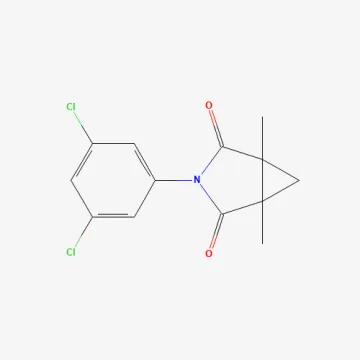
Procymidone
Description
Mode of action
Procymidone belongs to the dicarboximide chemical class. It is a systemic fungicide that provides both protective and curative action when used on a wide range of agricultural crops.
Its mechanism of action involves the specific inhibition of triglyceride biosynthesis in pathogen cells. The substance disrupts the metabolic processes of the fungus, leading to the blockage of mycelial growth and suppression of spore germination.
Due to its ability to penetrate plant tissues, the product effectively contains the development of infection even after the fungus has penetrated deep into the leaves or stems.
The active ingredient is characterized by high stability and a long period of protective action, which helps reduce the number of applications during the growing season.
Procymidone effectively suppresses fungal strains that have developed resistance to fungicides of other chemical groups, such as benzimidazoles.
What it targets
The primary purpose of procymidone is to control fungal diseases caused by pathogens from the classes of ascomycetes and imperfect fungi.
The substance shows the highest efficacy in combating gray mold (Botrytis cinerea), which affects fruit, berry, and vegetable crops in greenhouses and open fields.
The product is actively used to control sclerotinia, caused by fungi of the genus Sclerotinia, which affects stems and root necks of sunflowers, rapeseed, and vegetables.
Procymidone is also used to suppress agents of moniliosis on stone fruit crops and to control various types of leaf spots that occur under high humidity conditions.
- Botrytis blight (gray mold)
- Sclerotinia rot (white mold)
- Moniliosis
- Phomopsis
Rates and timing
Application rates of procymidone depend on the level of infection pressure, the growth stage of the crop, and the type of application equipment used.
When working in commercial greenhouses on vegetable crops, the product is typically applied at a concentration of 0.05–0.1% of the working solution using thorough spraying.
In field conditions for the protection of sunflowers and rapeseed, rates vary from 0.5 to 1.0 kg of the active ingredient per hectare, depending on plant density.
The timing of applications is linked to critical growth stages of the plants or the first visual signs of disease before the start of mass fungal sporulation.
The interval between repeat treatments is usually between 10 and 14 days, determined by the rate of vegetative mass growth of the crop.
Restrictions
Procymidone requires strict adherence to pre-harvest intervals to eliminate the presence of residues in the marketable produce.
It is not recommended to perform more than two consecutive treatments with the same product to prevent the development of resistance in pathogens to dicarboximides.
When handling the substance, personal protective equipment for skin, respiratory organs, and eyes must be used, as it is classified as a moderately hazardous compound.
It is important to consider phytotoxicity when exceeding concentrations and to prevent the working solution from drifting onto adjacent crops that are sensitive to this class of compounds.
Storage of the product should be carried out in dry warehouse facilities at temperatures that prevent the degradation of the active ingredient due to sunlight or moisture.
Status in the European Union
Not approved in the EU
- CAS number
- 32809-16-8
- Category (EU)
- FU - Fungicide
- ADI
- 0.0028 mg/kg bw/day
- ARfD
- 0.012 mg/kg bw
- AOEL
- 0.012 mg/kg bw/day
EU status is for reference only and does not replace national registration in your country.