
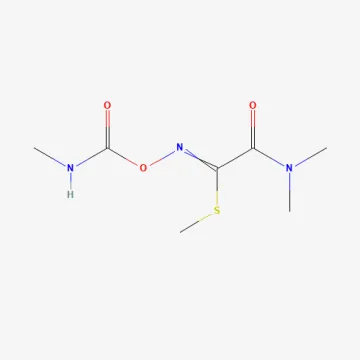
Oxamyl
Description
Mode of action
Oxamyl belongs to the carbamate chemical class and exhibits systemic activity within plants. The active ingredient provides both contact and stomach action, effectively blocking vital physiological functions of the pest organism.
The mechanism of action is based on the irreversible inhibition of the acetylcholinesterase enzyme in the nervous system of insects and nematodes. This leads to the disruption of nerve impulse transmission, causing paralysis and subsequent death of the pest.
Due to its high systemic properties, the substance is rapidly absorbed by the root system or leaves and translocated throughout the entire plant. This allows for the protection of parts of the crop that were not directly exposed during treatment.
Oxamyl is effective at various stages of pest development, including eggs, larvae, and adults. Its high nematicidal activity, which is rare among other insecticides, makes it an essential tool for soil-borne pest management.
The compound degrades relatively quickly in the environment, making it suitable for integrated pest management systems where a balance between high efficacy and ecological sustainability is required.
What it targets
The primary use of Oxamyl is for the control of a wide spectrum of soil-dwelling pests and insects that damage the above-ground parts of crops. The substance shows high efficiency against various nematode species, including root-knot and stem nematodes.
The product is actively used to combat sucking insects such as aphids, thrips, whiteflies, and leafhoppers. It is also effective against certain types of leaf-mining flies that damage the foliage of vegetable and ornamental crops.
Target organisms include:
- Root-knot nematodes (Meloidogyne spp.)
- Thrips on vegetable and floral crops
- Various species of aphids
- Greenhouse whitefly
- Leaf miners
The application of this product is justified in intensive farming conditions where the risk of nematode infestation in the soil is a critical factor leading to significant yield losses.
Rates and timing
Application rates for Oxamyl strictly depend on the crop type, method of application, and the level of soil infestation. The product can be applied via soil drenching, through drip irrigation systems, or as a foliar spray on growing crops.
When applying to the soil, it is crucial to ensure uniform distribution of the working solution to achieve contact between the active ingredient and the root zone. Pre-harvest intervals must be strictly observed to prevent residue levels in the final product.
For foliar applications, the number of treatments is typically limited to two or three cycles per season. The interval between spraying usually ranges from 7 to 14 days, depending on pest pressure and lifecycle.
When preparing the spray solution, use clean water and mix the product thoroughly. It is essential to ensure high-quality coverage of the leaf surface, paying particular attention to the underside of the leaves.
Regular monitoring of pest populations before and after application is recommended to evaluate biological effectiveness and adjust future protection strategies accordingly.
Restrictions
Oxamyl is a highly toxic substance to humans and warm-blooded animals, and therefore handling requires the use of full personal protective equipment, including skin and respiratory protection.
It is strictly forbidden to apply the product during the flowering period of crops, as it is extremely hazardous to bees and other beneficial pollinators. Beekeepers must be notified prior to any scheduled operations.
Application is not recommended on soils with high organic matter content, as this may reduce its mobility and efficiency. Furthermore, applications should be avoided when there is a risk of heavy rainfall that could cause leaching of the product.
Oxamyl must be stored exclusively in its original packaging, away from food and animal feed, in a location inaccessible to children and unauthorized persons, maintaining optimal temperature conditions.
In case of contact with skin or mucous membranes, flush the affected area immediately with plenty of soap and water and seek medical attention, keeping the product label available for the doctor.
Status in the European Union
Not approved in the EU
- CAS number
- 23135-22-0
- Category (EU)
- NE - Nematicide
- Approved from
- 01.08.2006
- Approval until
- 01.05.2023
- ADI
- 0.0001 mg/kg bw/day
- ARfD
- 0.0001 mg/kg bw
- AOEL
- 0.0001 mg/kg bw/day
EU status is for reference only and does not replace national registration in your country.