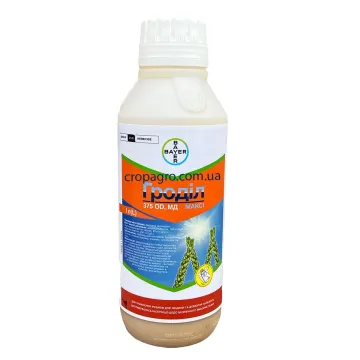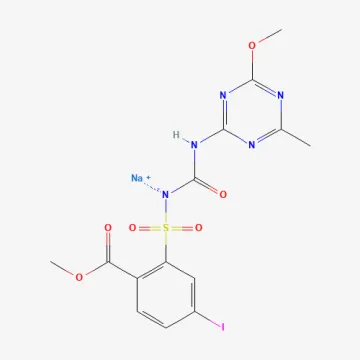
Active ingredient
Especially harmful
Iodosulfuron-methyl-sodium
Description
Mode of action
Iodosulfuron-methyl-sodium belongs to the sulfonylurea chemical class. It is a highly selective systemic herbicide that is efficiently absorbed by both the foliage and the root system of target weed species.
The primary mechanism of action involves the inhibition of the acetolactate synthase (ALS) enzyme in susceptible weeds. Blocking this enzyme disrupts the biosynthesis of essential branched-chain amino acids, specifically valine, leucine, and isoleucine.
As a result of this metabolic disruption, cell division ceases and weed growth stops. Weeds stop competing with crop plants for water, light, and essential soil nutrients within hours of application.
Complete weed control typically occurs within 2 to 4 weeks, although visual symptoms such as chlorosis and necrosis of the growth points appear within a few days. The systemic effect allows the compound to translocate through the phloem and xylem, affecting even difficult-to-reach meristematic tissues.
Due to its high selectivity, the active ingredient is rapidly metabolized within tolerant cereal crops, ensuring a high level of safety when used in accordance with the specified application guidelines.
What it targets
Iodosulfuron-methyl-sodium is primarily used for weed control in winter and spring wheat, barley, rye, and triticale crops. It serves as a vital component in many tank mixtures for managing a broad spectrum of broadleaf weeds.
The substance is effective against various weed species:
- cleavers (Galium aparine)
- common lambsquarters
- common vetch
- knotweed species
- shepherd's purse
- deadnettle
Additionally, this herbicide demonstrates strong activity against difficult weeds like thistles during their early development stages. It helps significantly reduce weed pressure in fields with historically high densities of broadleaf pests.
The control spectrum includes both sensitive annual weeds and some perennial grass species, making it an essential tool for intensive cereal cultivation technologies.
The application of this herbicide allows for increased cereal yields by preventing nutrient theft, ensuring that resources are available for the crop during its critical early vegetative growth phases.
Rates and timing
Application timing for Iodosulfuron-methyl-sodium products is generally focused on the active growth phase of weeds. The optimal window for the crop is from the beginning of tillering to stem elongation to ensure maximum protection efficiency.
Application rates are calculated based on the weed species present, the level of infestation, and the growth stage of the weeds. It is crucial to strictly follow the manufacturer's recommendations provided on the product label.
Applications are typically performed in temperature ranges between +10 and +25 degrees Celsius. Avoid treatments if night frosts are forecasted, as stress conditions may temporarily slow crop metabolism and reduce herbicide selectivity.
To enhance efficacy, surfactants are frequently added to the spray mix to improve leaf surface wetting and accelerate the penetration of the active ingredient into the plant tissues.
Under drought conditions, herbicide efficacy may decrease due to increased weed cuticle thickness. In such cases, adjusting the dosage within the labeled range for the specific crop is recommended.
Restrictions
Iodosulfuron-methyl-sodium has specific restrictions regarding follow-up crops in a rotation. While the substance degrades relatively quickly in soil, environmental factors like low temperature or severe drought may affect residual activity levels.
Do not apply this herbicide to crops under stress from pests, diseases, frost, or recent fertilizer applications, as this increases the risk of transient phytotoxicity on the cereal crop.
The product should not be mixed with certain organophosphate insecticides, as this combination may interfere with the herbicide's detoxification process within the crop, leading to potential leaf burn or growth inhibition.
Operators must strictly adhere to personal protective equipment (PPE) guidelines, including the use of protective clothing, gloves, respirators, and goggles. Avoid any contact with skin, eyes, or respiratory pathways.
It is essential to prevent spray drift onto sensitive neighboring crops, such as sugar beets, sunflowers, oilseed rape, or legumes, by utilizing high-quality spraying equipment and considering wind speeds.
Content graph
Connections · Iodosulfuron-methyl-sodium
Most often together:
Marketplace
Products · 15


MaiSTer 62WG w.g.
фірмі Байєр КропСаєнс АГ, м.Франкфурт, Німеччина
Herbicides
0
0
·
60
1 offer
110.39 €per 1 l
Buy