
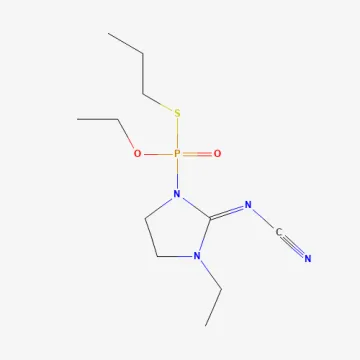
Imicyafos
Description
Mode of action
Imicyafos belongs to the organophosphate chemical class. It is a highly effective active ingredient with both systemic and contact action, used primarily as a nematicide for the protection of agricultural crops.
The mechanism of action of Imicyafos is based on the inhibition of acetylcholinesterase enzyme activity in the nervous system of pests. This leads to the disruption of nerve impulse transmission, causing paralysis and subsequent death of the nematodes.
The substance is characterized by its ability to penetrate the plant's root system, creating a protective barrier in the rhizosphere. Due to its mobility in the soil solution, Imicyafos provides reliable protection for roots against the penetration of pathogenic organisms.
The product acts not only on adult pests but also on their larvae, preventing their further development. The systemic effect allows for effective suppression of parasite populations during the critical growth phases of the crop.
Imicyafos is stable in the soil environment, which ensures a prolonged period of protection. When applied correctly, it does not lose its biological activity even with moderate fluctuations in soil temperature and moisture levels.
What it targets
The main scope of Imicyafos application is the control of root-knot, stem, and other species of phytoparasitic nematodes. It effectively protects vegetable, melon, and ornamental crops grown in both open and protected ground.
The product is used to protect nematode-sensitive crops such as tomatoes, cucumbers, peppers, potatoes, and ornamental plants. These crops are most prone to infestation, as root damage leads to a sharp decrease in yield.
Imicyafos helps to prevent the formation of specific galls on roots, which block the flow of nutrients and water to the aerial part of the plant. Timely application of the product preserves the integrity of the root system.
In addition to its direct nematicidal action, the substance indirectly contributes to increased plant resistance to secondary bacterial and fungal infections, which often penetrate tissues through damage caused by nematodes.
The use of the product is justified in fields with high levels of soil infestation, where alternative control methods, such as crop rotation or the use of resistant varieties, do not provide the required level of pest population control.
Rates and timing
The application rates for Imicyafos are strictly regulated and depend on the soil type, level of infestation, and method of application. Typically, the product is applied directly to the soil before planting or during seedling transplanting to localize the effect in the root zone.
An important aspect is the uniform distribution of the product in the soil, as this determines the effectiveness of the protection. The use of specialized soil application equipment or drip irrigation systems is often recommended.
Pre-harvest intervals must be strictly followed according to the manufacturer's regulations. This is necessary to ensure that residual amounts of the active ingredient in the produce decrease to safe levels established by quality standards.
When using Imicyafos in greenhouses, it is necessary to consider temperature and humidity levels, as these factors affect the rate of absorption by plant roots. It is recommended to perform treatments at the optimal time for each specific crop.
To prevent the development of pest resistance, agronomists recommend rotating Imicyafos with products from other chemical classes. Using it within integrated pest management systems allows for maximum economic efficiency.
Restrictions
Imicyafos is a toxic compound, so strict adherence to personal safety measures is necessary when working with it. The use of personal protective equipment, such as respirators, gloves, and safety goggles, is a mandatory requirement.
It is strictly prohibited for the product to enter open bodies of water or drinking water sources. The substance is highly hazardous to aquatic life, so washing leftover working solutions from fields into storm drains must be avoided.
Crop rotation restrictions include the need to observe intervals between treatments and subsequent plantings of sensitive crops. In case of premature crop failure after treatment, the regulations for soil reuse must be verified.
Storage of the product is only permitted in the original factory packaging, in dry, ventilated storage facilities inaccessible to children and pets. Storage near food products or animal feed is not allowed.
Disposal of product containers must be carried out in accordance with local legislation on hazardous waste management. The reuse of empty canisters or bags for household purposes is strictly prohibited.
Status in the European Union
Not approved in the EU
- CAS number
- 140163-89-9
- Category (EU)
- NE - Nematicide
EU status is for reference only and does not replace national registration in your country.