
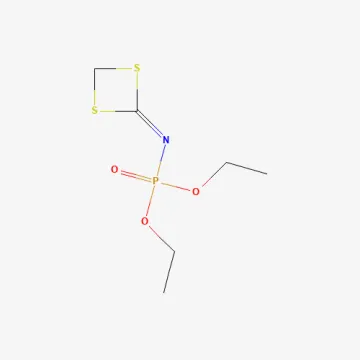
Fosthietan
Description
Mode of action
Fosthietan belongs to the class of organophosphorus compounds, utilized primarily as potent systemic insecticides and nematicides in commercial farming.
The substance functions by inhibiting the enzyme acetylcholinesterase, which is vital for the nervous system of pests, causing rapid paralysis and death upon exposure.
Its systemic nature allows it to be absorbed by plant roots and translocated throughout the plant structure, offering protection against various pests.
The compound is particularly effective at targeting organisms that live within the soil or deep inside plant tissues, where contact insecticides might fail.
Due to its chemical structure, it provides a residual effect in the soil, which helps in preventing recurring pest infestations during the early growth stages.
What it targets
Fosthietan is primarily employed to manage soil-borne pests, with a strong focus on controlling various species of parasitic nematodes that hinder crop growth.
It is widely effective against wireworms, false wireworms, and larvae of scarab beetles that feed on plant roots and tubers.
The compound is commonly applied in the cultivation of potatoes, tomatoes, and other high-value horticultural crops susceptible to soil-dwelling pests.
It is also used in nurseries and flower production to protect young plant starts from significant root damage caused by underground invertebrates.
- Root-knot nematodes
- Wireworms (Elateridae)
- Scarab beetle larvae
- Soil-dwelling nematodes
Rates and timing
Application rates for Fosthietan vary significantly based on soil type, crop variety, and the severity of the pest pressure observed in pre-season scouting.
The product is typically applied as a soil treatment, often integrated with mechanical soil preparation methods to ensure even distribution in the root zone.
Timing is critical; applications must be made before planting to allow the active ingredient to establish a protective zone for the developing root system.
Operators must adhere strictly to pre-harvest intervals (PHI) to ensure that residue levels in the final agricultural produce remain within safety limits.
Precision application equipment is recommended to minimize product waste and environmental exposure while maximizing the control over targeted pest populations.
Restrictions
Fosthietan is classified as a highly toxic substance, requiring specialized personal protective equipment (PPE) during handling, mixing, and application.
Due to its potential risk to the environment, it must not be applied in proximity to water bodies or areas with a high risk of runoff to protect aquatic life.
Proper storage in a secure, climate-controlled facility is mandatory to maintain the stability of the chemical and prevent unauthorized access.
All empty containers must be disposed of in accordance with local environmental regulations to prevent soil and water contamination.
The use of this substance should be part of an Integrated Pest Management (IPM) program to minimize reliance on chemicals and prevent pest resistance buildup.
Status in the European Union
Not approved in the EU
- CAS number
- 21548-32-3
- Category (EU)
- NE - Nematicide
EU status is for reference only and does not replace national registration in your country.