
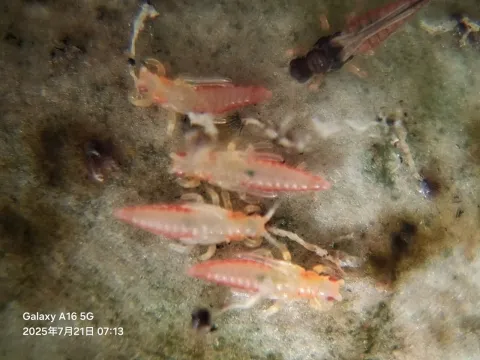
Grape thrips
Rhipiphorothrips
The grape thrips (Rhipiphorothrips cruentatus) is a small insect belonging to the order Thysanoptera and the family Thripidae, recognized as a significant pest in viticulture.
What the section contains
Grape thrips
Adults are tiny, elongated insects measuring about 1.0–1.5 mm in length, typically dark brown or black in color with feathery, narrow wings folded over their backs.
The larvae are bright yellow or orange and are highly active, feeding in colonies on the underside of leaves to avoid direct sunlight.
Their life cycle includes egg, two larval stages, prepupa, pupa, and adult, with the pupal stage frequently occurring in the soil or under leaf litter near the host plant.
Due to their small size and ability to hide, they are often overlooked by growers until visible damage to the canopy becomes significant.
Grape thrips are polyphagous, meaning they attack a wide range of hosts, including grapevines, pomegranates, and various deciduous fruit trees.
The primary damage occurs when both larvae and adults pierce plant cells and suck out the contents, causing a loss of chlorophyll and metabolic disruption.
On grapevines, infested leaves develop chlorotic spots and streaks, which eventually turn brown and necrotic, severely impacting the vine's photosynthetic capacity.
Heavy infestations can lead to premature leaf drop, which weakens the vine, reduces sugar accumulation in grapes, and compromises winter cold hardiness.
While damage to berries is less common, it can occur in high-pressure years, leading to skin scabbing and poor aesthetic quality of the cluster.
Grape thrips activity typically begins in late spring and peaks during the hot, dry weather conditions of mid-summer, which accelerate their life cycle.
Warm temperatures significantly shorten the generation time, allowing for multiple overlapping generations throughout the growing season.
As autumn approaches and temperatures drop, thrips search for suitable micro-climates in the soil or under debris to overwinter as pupae or adults.
In regions with mild winters or within glasshouse environments, the lifecycle may continue year-round without a distinct dormant period.
Dry conditions are particularly conducive to outbreaks, as they favor both rapid development and higher survival rates of the pupal stages in the soil.
Early warning signs include the appearance of tiny silver or metallic-looking spots on the foliage, often concentrated near leaf veins.
The presence of minute black specks of excrement on the underside of the leaves is a hallmark indicator of a thrips colony presence.
Leaves often begin to curl or deform, particularly along the margins, as the tissue dies back in response to the localized feeding injury.
Close inspection with a hand lens reveals the larvae moving actively on the underside of the leaf surface.
- Silvering or mottling of leaves.
- Black fecal spots on the leaf underside.
- Leaf curling and deformation.
- Premature yellowing and leaf abscission.
- Reduced vigor and stunted shoot growth.
Effective management requires a combination of cultural practices, such as weed removal and soil cultivation, to disrupt the pupation sites.
Biological control using predatory mites (like Amblyseius spp.) or beneficial insects can suppress thrips populations if integrated early in the season.
Chemical control using systemic insecticides is necessary during high infestations, though rotation of active ingredients is vital to prevent resistance.
Yellow or blue sticky traps serve as an excellent monitoring tool for early detection, helping farmers decide exactly when to initiate chemical control.
Maintaining vineyard hygiene, including the removal of infested prunings, helps reduce the carry-over population of pests into the following growing season.