
Grain thrips
Stenothrips graminum
Description
How to identify
Grain thrips (Stenothrips graminum) is a small insect belonging to the order Thysanoptera and the family Thripidae, recognized as a significant pest of various cereal crops.
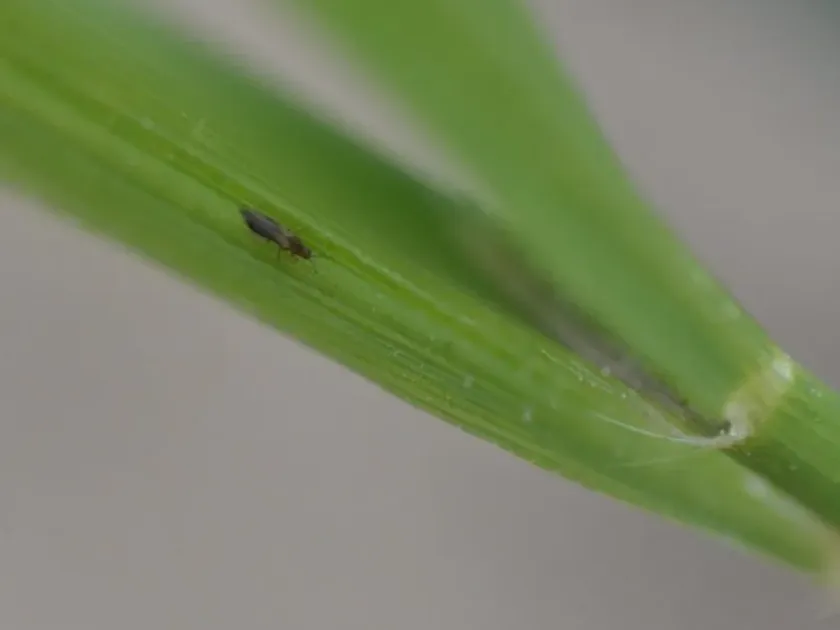
Adult insects are typically 1.2 to 1.5 mm long, characterized by a slender, dark-brown or black body and two pairs of narrow wings fringed with fine hairs.
The larvae are smaller than adults and have a yellowish or orange appearance, lacking functional wings, which makes them highly dependent on the host plant for shelter.
The life cycle includes egg, larva, prepupa, pupa, and adult stages, with the insect overwintering primarily as an adult in the soil or under crop residues.
Identification in the field is usually done by closely inspecting the spikes and leaves of grain crops during the active growth period, where they gather in large numbers.
What it damages
The pest primarily targets small grain cereals, including wheat, barley, rye, and oats, which are essential for global food production.
It also inhabits wild grasses, which act as alternative hosts, ensuring the survival of the population during periods when commercial crops are not available.
Feeding occurs by piercing the plant tissues and sucking out cell contents, which leads to the depletion of nutrients and physical damage to the leaves and developing spikes.
The most severe impact happens during the heading and grain-filling stages, where feeding on the ovaries causes partial sterility and shriveled grains.
Economic damage manifests as a significant reduction in grain yield and quality, often resulting in weight loss and lower protein content in the harvested crop.
When it appears
Adults emerge from hibernation in early spring when temperatures reach approximately 10-12 degrees Celsius, coinciding with the tillering phase of winter cereals.
The peak activity and reproduction period usually occur in late spring and early summer, matching the critical vegetative development stages of the plants.
The number of generations per season is heavily influenced by the local climate, with warm and dry summers facilitating a faster life cycle and more frequent outbreaks.
Larval development is most intense during the milking stage of the grain, making this a critical window for crop scouting and potential management interventions.
By late summer and post-harvest, adult thrips migrate towards the soil or protected areas to enter diapause, preparing for the upcoming winter season.
Signs of infestation
Initial signs of infestation appear as silvery or white patches on the foliage, caused by the destruction of cells and loss of chlorophyll during the feeding process.
Stunted growth and leaf curling are common, alongside the premature yellowing of the flag leaf, which significantly reduces the photosynthetic efficiency of the plant.
- dark fecal spots left by the insects on leaves;
- malformed or brittle spikes due to tissue destruction;
- blasted heads or significantly shriveled grain;
- lower grain count per spike compared to unaffected plants.
A closer look at the spikes usually reveals the presence of mobile insects hiding within the floral structures, which is a clear indicator of a high infestation level.
Scouting protocols should involve shaking plant heads over a white surface or using sweep nets to accurately estimate the population density before it exceeds thresholds.
Control measures
Implementing a rigorous crop rotation strategy is the primary cultural practice to disrupt the thrips life cycle and reduce reliance on chemical inputs.
Deep plowing and stubble management immediately after harvest are essential to bury larvae and adults, significantly increasing their mortality during the winter.
Adjusting sowing dates to ensure that the most vulnerable growth stages of the crop do not overlap with the peak population of thrips is an effective preventive measure.
Chemical control should be applied only when the economic injury level is reached, prioritizing systemic insecticides that can reach pests hidden within the spikelets.
Maintaining clean field borders by removing wild grasses helps reduce the movement of thrips into the main crop, effectively lowering the overall infestation pressure.
Taxonomy
- Latin name
- Stenothrips graminum
- Order
- Thrips
- Family
- Thripidae
- EPPO code
- STETGR
Discussion
No discussions yet — be the first.