
Grain thrips
Chirothrips manicatus
Description
How to identify
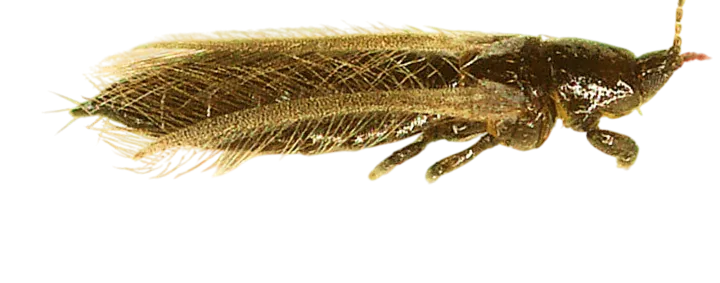
Grain thrips (Chirothrips manicatus) is a small insect species belonging to the order Thysanoptera and the family Thripidae, known for affecting cereal production globally.
Adult insects are typically 1 to 1.5 mm long, with a slender, elongated body that varies in color from pale yellow to dark brown, providing camouflage on stems.
The life cycle includes the egg stage, larva, prepupa, pupa, and adult. In temperate regions, it typically produces one generation per year.
Fertilized females overwinter in the soil or within the stubble of cereal grasses, protected from adverse weather conditions until the arrival of spring.
The morphology of the female is characterized by specialized protrusions on the forelegs, which are used to navigate through dense grass tissues and ears.
What it damages
Grain thrips predominantly affect major cereal crops including wheat, rye, barley, and oats, as well as various wild grass species that serve as hosts.
Both larvae and adults feed on plant sap by piercing the tissues of glumes and developing grains, causing stunted growth and reproductive damage.
The most critical period of damage occurs during the heading and flowering stages when the insects target the delicate reproductive structures of the plant.
Symptoms of feeding include localized bleaching and discoloration of the glumes, often referred to as silvering, which disrupts standard photosynthetic activity.
Economic damage is primarily caused by grain shriveling, reduced kernel weight, and in severe cases, partial or total sterility of the ears.
When it appears
Adult thrips emerge from their overwintering sites in early spring, synchronized with the onset of favorable temperatures and the development of host plants.
Migration to cereal fields usually peaks during the jointing and heading growth stages, as the insects seek out fresh plant tissues for feeding.
Larval development takes place within the ears over a period of several weeks, following which they drop to the soil to undergo pupation.
The population density is highly dependent on environmental factors, with warm and dry weather patterns significantly accelerating their development cycles.
By the time the grain reaches the dough stage, the majority of the new generation has completed its development and prepares for the winter diapause.
Signs of infestation
A primary visual symptom of infestation is the silvery appearance of the ear, which results from the destruction of the plant epidermis due to feeding.
Deformation or curling of the ears, combined with uneven development of the glumes, often indicates an active and significant thrips infestation.
Closer inspection of the ears frequently reveals the presence of small, yellowish larvae hiding within the bracts, confirming the pest presence.
Widespread empty florets or low-quality shriveled grain are indicators of substantial feeding pressure during the critical flowering period.
In addition to visual signs, the presence of the pest can be confirmed by observing the reduction in the weight of harvested grain compared to healthy control plots.
Control measures
Effective management begins with proper crop rotation, which limits the available host plants and disrupts the pest's annual life cycle significantly.
Deep autumn plowing and the removal of roadside weeds are essential cultural practices to reduce the number of overwintering sites for the insects.
Balanced fertilization and ensuring healthy plant growth help increase the crop's tolerance to thrips feeding throughout the growing season.
Chemical control using systemic insecticides may be required during the heading stage if population levels exceed established economic thresholds.
- Use of pest-resistant cereal varieties for improved resilience.
- Regular field scouting during the vulnerable growth stages.
- Timely harvest to prevent further spread and minimize yield losses.
Taxonomy
- Latin name
- Chirothrips manicatus
- Order
- Thrips
- Family
- Thripidae
- EPPO code
- CHITMA
Discussion
No discussions yet — be the first.