
Hawaiian flower thrips
Thrips hawaiiensis
Description
How to identify
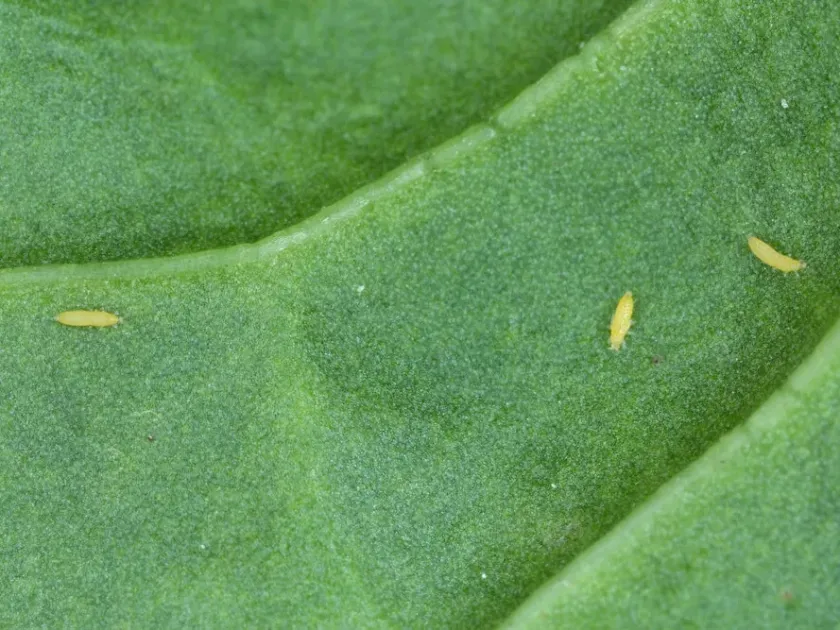
The Hawaiian flower thrips (Thrips hawaiiensis) belongs to the order Thysanoptera and the family Thripidae. These are extremely small insects, typically measuring between 1 to 1.5 mm in length, with a coloration that ranges from yellowish-brown to dark brown.
They possess narrow, fringed wings characteristic of the suborder Terebrantia. Because they are similar in appearance to many other flower-dwelling thrips, positive identification often requires professional entomological expertise and microscopic examination of specific morphological features.
The larvae are usually lighter in color, appearing translucent or pale yellow. They are highly cryptic, spending most of their time deep within flower buds or near the base of petals, making them difficult to detect without careful inspection.
Adult females are equipped with a specialized ovipositor, which allows them to insert eggs directly into the plant tissues. This behavior shields the eggs from predators and environmental stressors, complicating conventional control efforts.
The life cycle of this species is highly temperature-dependent, allowing for rapid population growth during warm periods. Under favorable climatic conditions, multiple generations can occur within a single growing season.
What it damages
Thrips hawaiiensis is a highly polyphagous pest with a wide range of host plants. It severely affects agricultural and ornamental crops, including citrus, grapes, hibiscus, and various species of orchids, especially in tropical climates.
The damage is caused by the insects piercing the plant cells and sucking out the sap. This process leads to localized tissue death and systemic weakening of the plant's overall vitality.
Floral damage is a primary concern, as infestation leads to deformed blooms, loss of marketability, and potential abscission of flowers and young fruits. For commercial flower growers, this results in significant economic losses.
Beyond direct feeding damage, these thrips are documented vectors for several plant viruses. The introduction of these pathogens into a healthy crop can be far more devastating than the feeding damage itself.
In fruit-bearing plants, feeding results in unsightly surface blemishes, such as corky spots or uneven coloration. Such damage reduces the quality of the harvest and limits the potential for long-term storage.
Signs of infestation
Early symptoms of an infestation include the appearance of tiny silvery or whitish streaks on the petals. These spots are the result of cell collapse following the insects' feeding activity.
Leaves affected by the thrips often display distorted growth, curling, and the presence of small black fecal spots. These signs are indicative of an active population inhabiting the foliage.
A simple field diagnostic method is to tap the flower heads over a sheet of white paper. The activity of the insects will cause them to fall onto the paper, making them easy to observe and quantify.
Severe infestations lead to buds that fail to open correctly, showing asymmetrical development and browned edges. The plant loses its aesthetic value and becomes noticeably stunted in growth.
In greenhouse settings, honeydew secretion may occur, leading to the growth of sooty mold. This layer not only looks unsightly but also inhibits the plant's ability to undergo photosynthesis effectively.
Control measures
Effective management of the Hawaiian flower thrips requires an Integrated Pest Management (IPM) approach. This includes consistent monitoring with blue or yellow sticky traps to track population spikes.
Cultural control strategies involve the removal of weed hosts surrounding the crop areas, which can serve as reservoirs for the pest. Prompt disposal of heavily infested plant materials is essential to minimize spread.
Chemical control must be executed with careful rotation of insecticides to prevent the development of resistance. Spinosad-based products and certain neonicotinoids or abamectin are often recommended for their efficacy.
- Utilizing biological control agents such as predatory mites (e.g., Amblyseius) in greenhouse environments.
- Maintaining proper greenhouse humidity and ventilation to discourage rapid thrips reproduction.
- Applying insecticides during cool parts of the day to maximize contact and safety for pollinators.
Preventive measures, such as strict quarantine protocols for new plant material, are crucial. Regular disinfection of tools and equipment prevents the mechanical transfer of thrips between different sections of a farm or garden.
Taxonomy
- Latin name
- Thrips hawaiiensis
- Order
- Thrips
- Family
- Thripidae
- EPPO code
- THRIHA
Discussion
No discussions yet — be the first.