
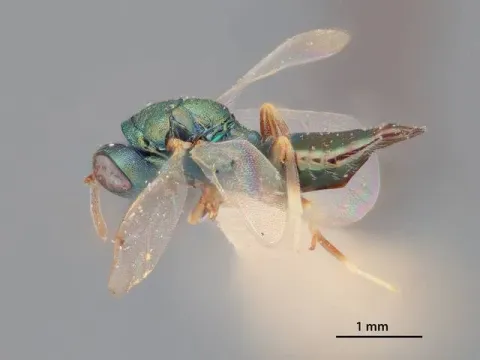
Pteromalus chrysos
Pteromalus chrysos
Pteromalus chrysos belongs to the order Hymenoptera and the family Pteromalidae. These are tiny parasitic wasps that play complex roles in agroecosystems, often acting as biological regulators but sometimes appearing in contexts associated with crop-related issues.
What the section contains
Pteromalus chrysos
Physically, they are small wasps characterized by a distinct metallic sheen, which is a hallmark of the Pteromalidae family. Precise identification usually requires microscopic examination of wing venation and antennal segments.
The biology of this species is intricately linked to its insect hosts. Females possess a specialized ovipositor that allows them to pierce the protective layers of other insects to lay their eggs, effectively using them as hosts for their larval development.
The larvae develop inside or on the host, consuming its tissues until the host is consumed. This life cycle is a vital natural mechanism for controlling various insect populations within agricultural fields.
Population dynamics are highly sensitive to environmental factors such as temperature and humidity, which directly influence the duration of each life stage and the overall reproductive success of the population.
The economic impact of this species is often nuanced. While primarily considered beneficial as natural enemies, high local concentrations can sometimes interfere with agricultural balance, and their search for hosts can occasionally lead to unintended interactions with crop tissues.
In agricultural settings, they are commonly found in grain and technical crop fields where their hosts reside. While they rarely feed on the plants directly, their presence can be indicative of underlying pest issues that require attention.
Damage, if any, is usually indirect, stemming from the disruption of natural predator-prey dynamics or from activity during critical plant growth stages, such as grain filling or fruit development.
The primary concern for farmers is the potential for these wasps to be harmed by broad-spectrum pesticide applications, which can lead to a resurgence of more aggressive pests that these wasps naturally help manage.
Regular field assessments are essential to determine whether the presence of Pteromalus chrysos is beneficial or if it signifies a broader imbalance in the agroecosystem requiring intervention.
Adult activity of Pteromalus chrysos typically commences in the spring as soil temperatures rise. Their peak activity usually aligns with the emergence or developmental peaks of their host insect populations.
Multiple generations can occur throughout the growing season, with the speed of development largely dependent on ambient weather conditions. Favorable warmth often leads to accelerated reproductive cycles.
As autumn approaches, individuals enter a state of diapause. They overwinter in protected environments, including crop residues, soil cracks, or beneath the bark of nearby trees, ensuring their survival during winter months.
The synchronization between the emergence of the wasps and their hosts in the spring is a critical period for the species. Understanding this timing is crucial for effective monitoring and pest management decisions.
Field monitoring should start during the early vegetative growth stages of crops, utilizing sweep nets or sticky traps to detect the arrival of the first adult generations.
Effective management begins with sound agronomic practices, such as deep plowing in the autumn, which disturbs overwintering sites and reduces the population density for the following season.
Chemical control should be applied with extreme caution. Selective insecticides are preferred to ensure that beneficial entomofauna, including parasitic wasps, are preserved while targeting the actual crop pests.
Crop rotation is an essential strategy to disrupt the host-finding success of these insects. By changing the crop environment, farmers can reduce the stability of the local pest population.
- Implement integrated pest management (IPM) to minimize reliance on chemicals.
- Remove non-crop vegetation that serves as an overwintering reservoir for pests.
- Conduct periodic scouting to monitor both the pest and the beneficial insect populations.
When economic thresholds are exceeded, the application of targeted insecticides must be timed correctly to reduce the impact on non-target species, always following the specific guidelines for the chemical used.