
Pteromalus larvarum
Pteromalus larvarum
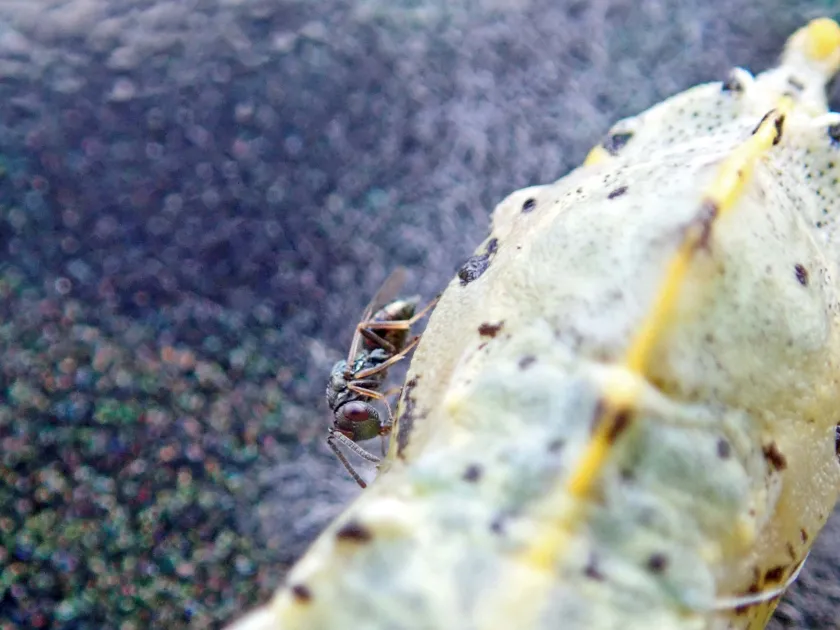
Description
How to identify
Pteromalus larvarum belongs to the order Hymenoptera, family Pteromalidae. This is a tiny parasitic wasp, typically measuring between 2 to 5 millimeters in length, making it quite difficult to spot in the field without close inspection.
The adults exhibit a characteristic metallic luster, often ranging from green to bronze. They possess transparent wings with distinct venation, which is a key diagnostic feature for this family of wasps.
As a parasitoid, this insect specializes in attacking the larvae of various Lepidoptera. While often classified as a beneficial insect, its complex ecological role can sometimes lead to competition with other natural enemies of plant pests.
The larvae are whitish or yellowish, legless, and develop within or on the body of the host. They go through several developmental stages, feeding on the host's tissues until they are ready to pupate.
Adult wasps are highly mobile, searching actively for host larvae to oviposit. Their presence in an ecosystem is often linked to the availability of flowering plants, which provide nectar as a supplementary food source.
What it damages
While Pteromalus larvarum is typically viewed as a biological control agent, it can occasionally act as a hyperparasitoid, attacking other beneficial insects. This behavior can disrupt the natural regulation of pest populations in managed gardens.
The primary hosts include larvae of various moths (e.g., loopers and owlet moths) that feed on leaves and shrubs. In high populations, these wasps may inadvertently cause a decline in the effectiveness of natural biocontrol by suppressing other predators.
Damage to plants is largely indirect, resulting from the failure of natural enemies to control primary defoliating pests. When the balance of entomophagous insects is disturbed, pest outbreaks are more likely to occur.
Economic damage is generally low, but in integrated pest management (IPM) systems, it is essential to monitor the population balance to avoid unnecessary chemical treatments that could further destabilize the ecosystem.
The disruption of local insect communities is the main risk associated with this species. Maintaining a healthy environment with diverse flora is crucial for preventing imbalances caused by excessive parasitoid activity.
When it appears
Activity begins in early spring when temperatures consistently reach 10–12 degrees Celsius. The first generation of wasps emerges in synchronization with the development of overwintered host larvae.
Peak activity usually occurs during late May and June. During this time, the wasps are most active in finding hosts, ensuring that their offspring have sufficient food for rapid development throughout the early summer.
Depending on the climatic conditions and the availability of hosts, the species can produce multiple generations per season. This multivoltine nature allows them to persist throughout the entire growing season.
As autumn approaches, the biological cycle slows down, and the insects enter diapause. They overwinter as pupae within the remains of their hosts or in protective cocoons hidden in plant crevices.
Warm and moderately humid conditions are optimal for their development. Severe heat or prolonged droughts can negatively impact the survival rates of these wasps, leading to a significant reduction in the next year's population.
Control measures
The most effective strategy for managing Pteromalus larvarum is to foster a biodiverse environment that supports balanced predator-prey dynamics. Avoid indiscriminate use of broad-spectrum insecticides which often harm beneficial wasps.
Integrated Pest Management (IPM) practices should be followed, focusing on selective biological control agents rather than harsh chemicals. This preserves the population of natural enemies that are vital for long-term plant health.
Cultural methods, such as removing debris and weeds during the dormant season, help reduce the number of overwintering sites for both pests and their associated parasitoids, leading to a more controlled environment.
Monitoring the insect population is vital for informed decision-making. If the parasitoid activity is high, growers should refrain from treatments that would negatively affect these beneficial species, provided the primary pest threat is manageable.
- Maintain floral borders to support beneficial insects.
- Avoid broad-spectrum chemical sprays during peak wasp activity.
- Use selective biopesticides only when necessary.
- Practice good sanitation to manage host pest populations.
Taxonomy
- Latin name
- Pteromalus larvarum
- Order
- Hymenoptera
- Family
- Pteromalidae
- EPPO code
- PTERLA
Discussion
No discussions yet — be the first.