
Pteromalus cioni
Pteromalus cioni
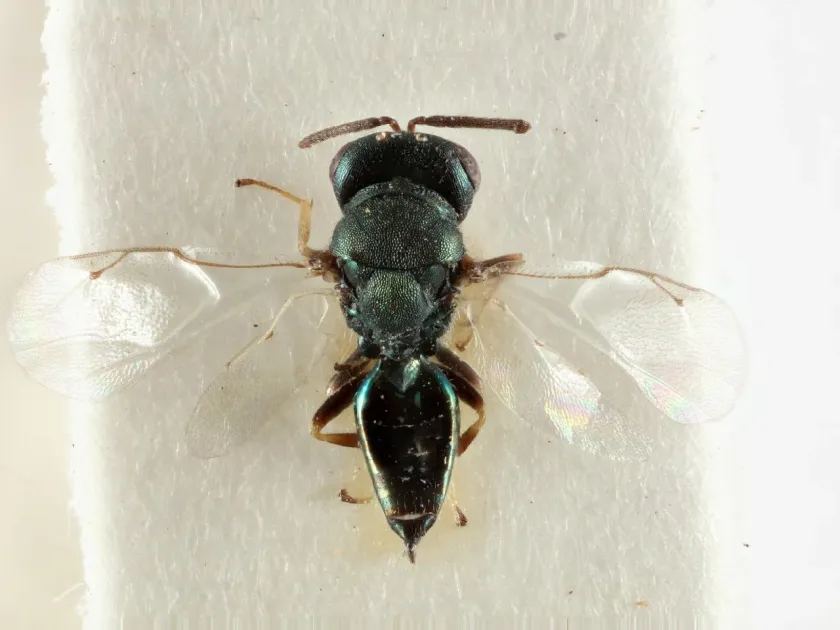
Description
How to identify
Pteromalus cioni is a representative of the Hymenoptera order, family Pteromalidae. These insects are small wasps that play a complex role in agroecosystems as parasitoids or hyperparasitoids.
Adults are characterized by a metallic body sheen and small size. Due to their morphological similarity to other species, precise identification in the field is difficult without entomological training.
The insect follows a complete metamorphosis cycle. The female wasp locates a host larva or pupa, laying eggs directly onto it or into the host's enclosure to provide immediate food for larvae.
Development is highly dependent on ambient temperature and humidity. Multiple generations can occur within a single growing season, allowing for rapid population fluctuations.
The species exhibits high searching efficiency, allowing females to locate hosts even at low densities, which is a key trait of this particular parasitoid group.
What it damages
The primary concern regarding Pteromalus cioni is its potential role as a hyperparasitoid, which can negate biological control programs by attacking beneficial predatory wasps.
By suppressing the populations of primary parasitoids, this species can indirectly lead to an increase in the number of primary crop pests, such as beetles or moth larvae.
There is no direct physical damage to plants, as the adult wasps do not feed on plant tissues. However, their influence on the biological control balance is a significant agronomic factor.
Presence of this species is typically observed in fields where primary host insects are abundant, making it a bio-indicator of the existing insect population dynamics.
Agro-economic harm is primarily indirect, resulting from the disruption of natural suppression mechanisms that otherwise keep primary agricultural pests below economic threshold levels.
Control measures
Effective control starts with accurate monitoring of the local entomofauna using sticky traps and insect observation protocols to assess the ratio of pests to beneficial insects.
Minimize the use of broad-spectrum insecticides, as these chemicals often indiscriminately kill beneficial parasitoids and predators, leading to secondary pest outbreaks.
Enhancing habitat diversity by planting flower strips and maintaining field margins can provide alternative food sources and refuges for beneficial parasitoid species.
Cultural practices, such as proper crop rotation and tillage, help disrupt the life cycles of hosts, thereby reducing the habitat availability for Pteromalus cioni.
When chemical intervention is necessary, prioritize the use of selective biorational pesticides that specifically target the primary pest while preserving the natural enemy community.
Taxonomy
- Latin name
- Pteromalus cioni
- Order
- Hymenoptera
- Family
- Pteromalidae
- EPPO code
- PTERCI
Discussion
No discussions yet — be the first.