
Pteromalus bedeguaris
Pteromalus bedeguaris
Description
How to identify
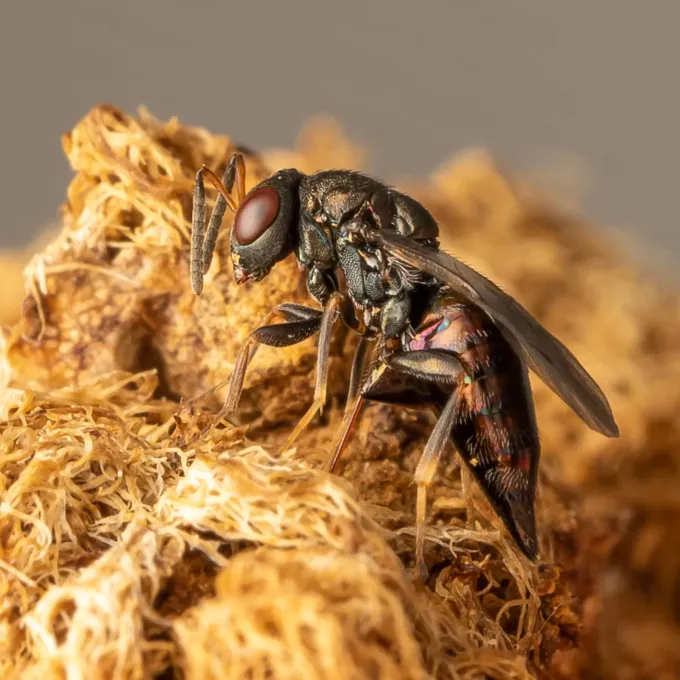
Pteromalus bedeguaris is a species of hymenopteran insect belonging to the family Pteromalidae, known for their metallic coloration.
These wasps are small, typically ranging from a few millimeters in length, and exhibit the characteristic physical traits of the Chalcidoidea superfamily.
The body displays a vibrant metallic green or bluish-black sheen, which is a common morphological feature among various pteromalid species.
Identification often requires a dissecting microscope to examine wing venation and antennal segments, which are critical for distinguishing the species.
As a specialized parasitoid, this insect plays a fundamental role in regulating natural insect populations within rose-growing environments.
What it damages
This species is not a plant pest; rather, it is a highly beneficial insect that functions as a natural regulator of gall-forming wasps.
It specifically targets the larvae of the gall wasp Diplolepis rosae, which are responsible for forming the hairy "bedeguar" galls on wild roses.
By consuming the larvae of the gall wasp, Pteromalus bedeguaris directly reduces the damage caused by these insects to the host plants.
There is no economic damage to roses caused by this wasp, as it focuses exclusively on the immature stages of its host insects.
In agricultural and horticultural practices, the presence of this parasitoid is considered a positive indicator of natural pest management.
When it appears
The life cycle of Pteromalus bedeguaris is synchronized with the development of its host, the rose gall wasp.
Adult wasps typically emerge in the spring, coinciding with the fresh development of galls on rose stems, ready to lay eggs.
Multiple generations may occur throughout the growing season, ensuring continuous predation pressure on the developing gall wasp larvae.
Overwintering occurs as larvae or pupae tucked safely within the hardened structure of the galls on the rose branches.
Environmental conditions, particularly temperature fluctuations in early spring, dictate the timing and intensity of the adult wasp emergence.
Signs of infestation
The primary sign of the presence of Pteromalus bedeguaris is the emergence holes visible on the surface of mature rose galls.
These holes are tiny, circular, and indicate where the adult wasp has exited the gall chamber after completing its developmental cycle.
A high density of these holes in a gall usually signifies that the parasitoid has successfully significantly reduced the pest population inside.
Opening a gall will reveal the internal chambers, which may be empty or contain pupal cases of the wasp if the population is active.
No specific symptoms of injury appear on the plant foliage or stems as a result of the wasp's activities, confirming its status as a beneficial insect.
Control measures
No chemical control is required for Pteromalus bedeguaris, and it should be protected as part of an integrated pest management strategy.
The use of broad-spectrum insecticides should be avoided to prevent the unintentional elimination of these helpful natural enemies.
Habitat preservation, including maintaining hedgerows and wild rose stands, supports the long-term sustainability of this parasitoid population.
If management of gall wasps is necessary, physical removal and destruction of galls during late winter is the preferred, eco-friendly method.
Encouraging the presence of this wasp helps maintain healthy ecological balance, reducing the need for intensive chemical interventions in gardens.
Taxonomy
- Latin name
- Pteromalus bedeguaris
- Order
- Hymenoptera
- Family
- Pteromalidae
- EPPO code
- PTERBE
Discussion
No discussions yet — be the first.