
White-throated sparrow
Zonotrichia albicollis
Description
How to identify
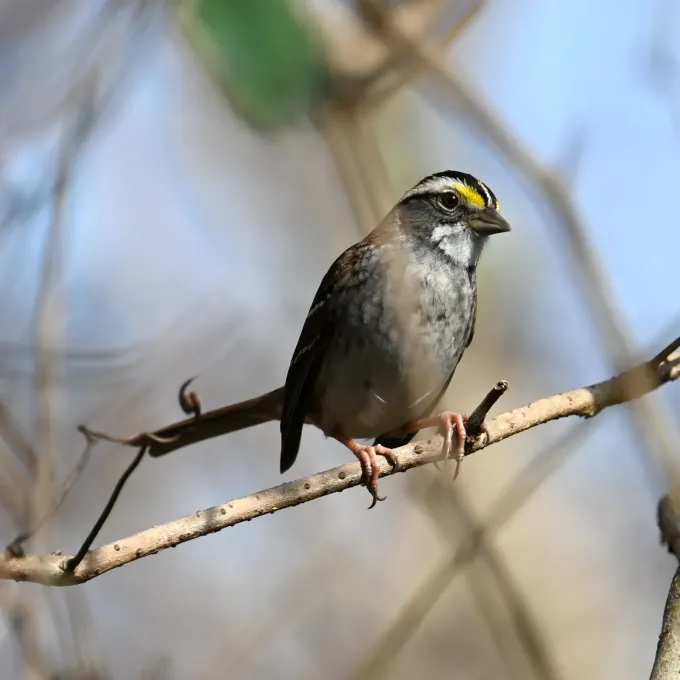
The white-throated sparrow (Zonotrichia albicollis) is a passerine bird of the Passerellidae family, recognizable by its distinct throat patch.
Adult birds possess a striking white throat patch, black head stripes, and notable yellow lores, which serve as reliable diagnostic features for field identification.
These birds exhibit social behavior and often gather in flocks, which can increase the intensity of feeding in specific agricultural sectors.
The plumage of juvenile birds is duller and streaked, providing camouflage when they forage near the ground or in dense vegetation near fields.
They are migratory birds, often moving through agricultural landscapes during the critical stages of crop establishment and harvest preparation.
What it damages
The primary agricultural damage occurs during the sowing phase, as the birds actively search for and consume newly planted seeds in open fields.
Seedlings of wheat, barley, and other grain crops are frequently damaged as the birds nip off the emerging shoots, causing stand thinning.
During the grain-filling stage, the birds damage standing crops by feeding on the maturing seeds, which directly reduces the total yield per hectare.
Beyond cereals, they can affect berry farms by destroying fruit buds in the early spring, leading to significant losses in berry production.
The physical presence of large flocks leads to trampling of the crops, which ruins plant structure and creates entry points for fungal pathogens.
When it appears
Feeding activity is highest during the spring planting season when seeds are easily accessible on or near the surface of the soil.
A second peak in damage occurs during the late summer and early autumn when grains reach the maturity stage and become a primary food source.
The timing of these movements is closely linked to seasonal migration, which makes fields along flight paths particularly vulnerable to damage.
During the nesting season, the focus of the birds shifts slightly, but they continue to forage in agricultural edges for additional protein sources.
Post-harvest periods are less critical, though birds may gather on fields to feed on waste grain, providing a marginal benefit for sanitation.
Signs of infestation
The presence of scattered, empty drill holes where seeds were placed is a clear indicator that birds have been feeding on the seedbed.
Ragged edges on young leaves or the complete absence of shoot tips on sprouts are diagnostic signs of bird foraging in the early stages.
The accumulation of bird droppings on leaves and on the ground confirms the presence of a flock and indicates the intensity of their feeding activity.
Hearing the characteristic clear, flute-like song from nearby hedgerows often alerts farmers to the proximity of the birds to the crop fields.
Small patches of flattened crop plants within a field, often accompanied by seed husks, indicate a congregation of birds feeding on the grain.
Control measures
Visual deterrents such as holographic tapes, motion-activated effigies, and reflective surfaces are standard methods for discouraging bird presence.
Increasing the planting depth during seeding operations significantly reduces the accessibility of seeds and minimizes early-stage crop loss.
Acoustic deterrent systems, including propane cannons or recorded distress calls, can be effective in moving flocks away from sensitive crop areas.
Maintaining hedgerows with diverse vegetation can act as a natural buffer, encouraging birds to feed on alternative sources rather than cultivated crops.
Approved chemical seed treatments that function as repellents can be used to deter birds, provided they comply with local environmental safety laws.
Taxonomy
- Latin name
- Zonotrichia albicollis
- Family
- Emberizidae
- EPPO code
- ZONTAL
Discussion
No discussions yet — be the first.