
Corn bunting
Emberiza calandra
Description
How to identify
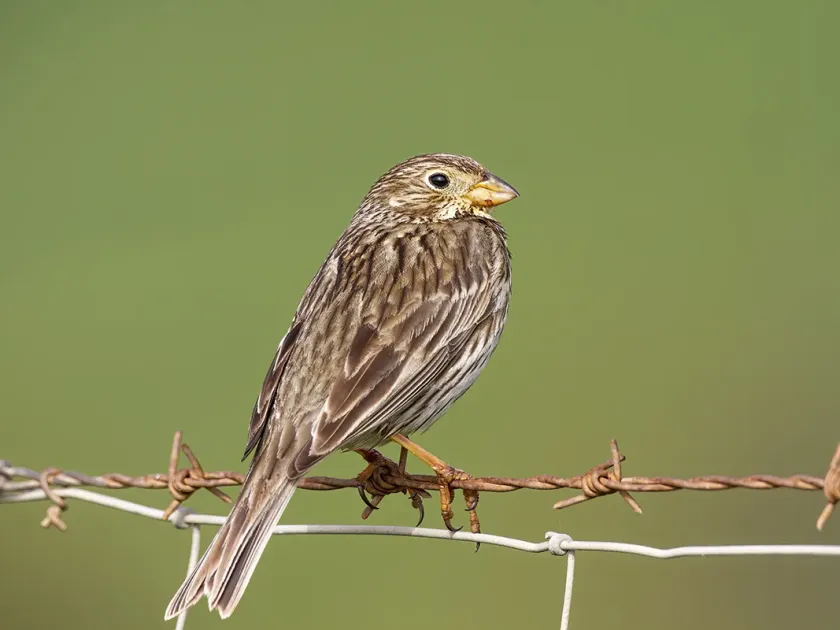
The corn bunting (Emberiza calandra) is a bird species belonging to the Emberizidae family within the order Passeriformes. It is a relatively large, stocky bird with brown-streaked plumage, often mistaken for a skylark due to its drab appearance.
The bird has a distinctive heavy, conical beak adapted for cracking hard seeds and grains. It lacks bright colors, relying on cryptic camouflage to blend in with stubble and dry vegetation.
Males are known for their repetitive, metallic song, typically delivered from an elevated position such as a fence post, utility line, or the top of a tall crop stalk.
These birds are characteristic of open farmland, meadows, and grassland habitats where they find suitable nesting sites in tall grasses or scrubby areas.
They are often observed in small groups, particularly after the breeding season, when they frequent agricultural areas in search of food sources provided by cultivated grains.
What it damages
Corn buntings are considered pests in agricultural regions as they feed on a variety of cereal crops, most notably wheat, barley, oats, and millet.
The damage is most severe during the milk and dough stages of grain development, when the seeds are soft and highly nutritious for the birds.
Besides the direct loss of grain, the birds cause physical damage to crops by trampling plants, breaking stalks, and dislodging ears, which reduces the overall yield quality.
In addition to direct consumption, the birds may facilitate the spread of fungal pathogens by creating entry points on the ears while pecking at the developing grains.
Large flocks can quickly deplete margins of fields, leading to significant economic losses for farmers, especially in fields bordering permanent nesting habitats.
When it appears
The presence of corn buntings in agricultural fields coincides with the planting and growing cycles of cereals, beginning with their arrival at breeding territories in spring.
The most critical damage occurs during the summer months—June and July—when cereal crops reach their reproductive and grain-filling stages.
Activity on the fields continues after harvest, as the birds congregate on stubble to feed on spilled grain and weed seeds remaining on the soil surface.
During the autumn, birds form larger flocks and may forage on newly sown winter crops, potentially damaging germinating seeds or early seedlings.
The seasonality of their pest activity is closely linked to the phenological development of the crops they exploit for their daily caloric requirements.
Signs of infestation
A primary indicator of infestation is the frequent sighting of bird flocks on or near the field margins, particularly during the early morning and late afternoon hours.
Field inspections often reveal damaged ears, characterized by missing or crushed grains and small puncture marks on the glumes left by the birds' powerful beaks.
Abundant bird droppings found on the ground in specific areas of the field serve as a clear indicator of localized feeding grounds where flocks congregate.
The presence of flattened or broken crop stalks in certain patches is a direct consequence of birds perching on or moving through the dense crop canopy.
Finding empty grain husks or discarded plant material on the soil indicates that the birds have successfully extracted the nutrient-rich endosperm from the seeds.
Control measures
Integrated bird management often involves the use of acoustic deterrents, such as propane cannons or ultrasonic devices, which disrupt the birds' feeding patterns.
Agronomic strategies include rapid and efficient harvesting to reduce the window of opportunity for birds to access the vulnerable grain in the field.
Maintaining clean field borders by removing weeds and tall grass reduces the availability of secondary food sources and potential cover for the birds.
Establishing buffer zones around fields or using visual scarecrows (including realistic raptor silhouettes) can discourage the birds from settling in the area.
In certain intensive agricultural systems, managing the landscape to support natural predators can help keep local corn bunting populations below economic damage thresholds.
Taxonomy
- Latin name
- Emberiza calandra
- Family
- Emberizidae
- EPPO code
- EMBRCA
Discussion
No discussions yet — be the first.