
Yellowhammer
Emberiza citrinella
Description
How to identify
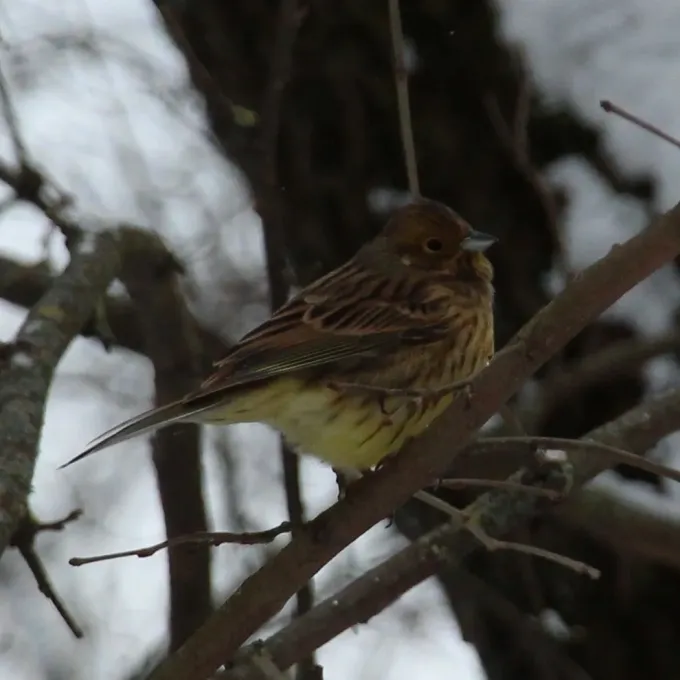
The Yellowhammer (Emberiza citrinella) belongs to the order Passeriformes and the family Emberizidae. It is a distinctive songbird easily recognized by the male's bright yellow head and underparts.
These birds usually measure about 16 to 17 centimeters in length. They are characterized by a streaky brown appearance on the back, which provides effective camouflage against the ground and stubble.
Yellowhammers prefer open landscapes, farmland with hedges, and woodland edges. Their presence is often revealed by their simple, rhythmic song, often heard throughout the spring and summer.
They typically nest on or near the ground, concealed within thick vegetation, hedgerows, or scrub, making their breeding sites difficult to locate during the summer months.
Outside the breeding season, Yellowhammers form flocks and move into open fields, where they search for seeds and grains, which brings them into direct conflict with agricultural interests.
What it damages
Yellowhammers cause damage to agricultural crops by feeding on the grains of cereals, including wheat, barley, and oats, particularly during the milky-ripe stage.
The damage is most severe during the pre-harvest period when the grain is soft and accessible. Flocks can feed on large areas of standing crops, leading to significant yield losses.
They tend to cause localized damage at field edges, especially where those fields are adjacent to hedgerows or shrubby areas that provide immediate cover for the birds.
Beyond consuming the grain, the birds cause physical damage to the stalks, leading to lodging. This makes mechanical harvesting more difficult and increases losses during the gathering process.
In autumn, Yellowhammers may target freshly sown winter crops, consuming the seeds before they have a chance to germinate, resulting in thin, uneven stands in the following spring.
When it appears
The highest level of pressure from Yellowhammers occurs during the late summer, specifically July and August, as the cereal crops reach their nutritional peak for the birds.
Early spring presents a risk when sowing winter crops or spring grains, as exposed seeds can attract flocks that have not yet dispersed to their breeding grounds.
Throughout autumn and winter, the birds remain active in the agricultural landscape, often gathering in large flocks on stubble fields or near storage facilities.
Their life cycle in farmland areas is intrinsically linked to the availability of seed sources, making them a year-round presence in regions with intensive grain production.
Fluctuations in their population density are often related to the success of the breeding season and the availability of alternative natural food sources during colder months.
Signs of infestation
The primary sign of a Yellowhammer infestation is the presence of partially consumed ears of grain at the edges of fields, where the top or middle portions appear empty.
On the ground between rows, one may find husks and empty chaff, which indicate active feeding sites used by a flock of birds over several days.
Direct observation of the birds is easy, as they are noisy when disturbed and often fly in small groups from the field to a nearby fence or hedge when approached.
In winter wheat fields, patchy or sparse germination patterns near the field edges are a common indication of seed loss due to bird activity during the sowing phase.
- Ears of grain with missing seeds near field margins.
- Chaff and debris left on the ground.
- Groups of birds observed frequenting the edges of standing crops.
- Sparse or missing plant stands after germination.
Control measures
Visual deterrents, such as reflective tape, scarecrows, or rotating kinetic devices, are effective in discouraging flocks from settling on specific parts of a field.
Acoustic scare devices that mimic the calls of predatory birds or emit sudden, loud noises can effectively keep the birds away during the most vulnerable periods of crop development.
Proper agronomic practices, such as ensuring seeds are sown at the correct depth, are essential to prevent the birds from reaching the seeds during the early stages of growth.
Reducing the availability of nearby cover, such as clearing weeds and dense scrub along field margins, can discourage the birds from using those areas as vantage points for feeding.
Timely harvesting of crops is the most effective way to reduce the window of opportunity for Yellowhammers to cause significant economic losses in cereal production.
Taxonomy
- Latin name
- Emberiza citrinella
- Family
- Emberizidae
- EPPO code
- EMBRCT
Discussion
No discussions yet — be the first.