
Rustic bunting
Emberiza rustica
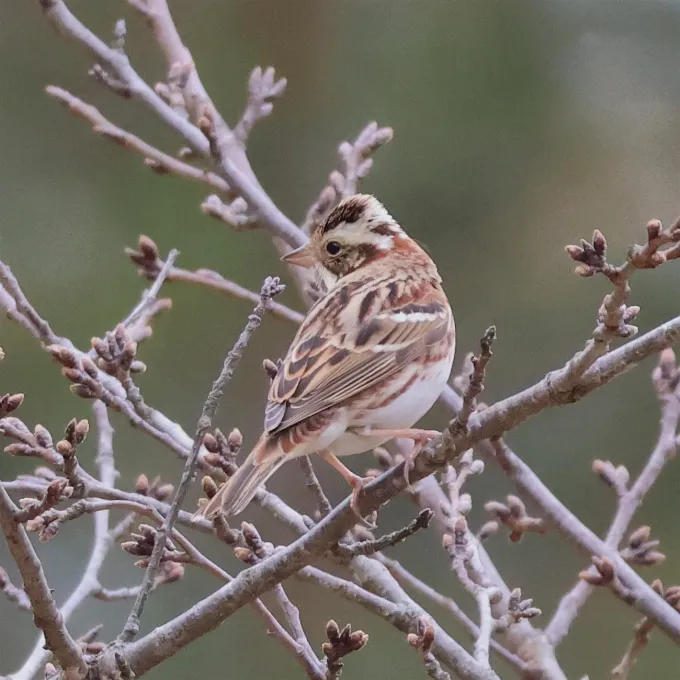
Description
How to identify
The rustic bunting (Emberiza rustica) is a small passerine bird species belonging to the family Emberizidae. It is characterized by a distinctive plumage, including a dark crown and a bold white supercilium, which makes it identifiable for keen observers.
Measuring about 14–15 cm in length, this bird possesses a robust, conical beak. This anatomical feature is perfectly adapted for cracking seeds and grains, which explains its opportunistic behavior in agricultural settings during the ripening stage of cereal crops.
While the species primarily nests in wetland forest environments, its post-breeding behavior involves the formation of flocks. During late summer and autumn, these flocks often move toward open agricultural fields to forage before their migration.
The biology of the rustic bunting is tied to its high energy requirements during the migratory season. Agricultural crops, being rich in carbohydrates, become an attractive source of fuel for these birds, leading them to concentrate in areas near their woodland habitats.
These birds are known to be wary and sensitive to human presence. When they forage, they rely on the proximity of trees and bushes, which serve as vantage points for detecting predators or potential threats.
What it damages
The rustic bunting primarily targets cereal crops such as wheat, barley, and oats. The birds feed on the grains during the milky and soft dough stages, significantly reducing the yield by consuming the internal endosperm of the seeds.
Damage is not limited to the consumption of grains. The birds physically damage the ears by breaking stems and causing grains to shatter onto the ground. This mechanical damage contributes to increased harvest losses and can promote fungal growth on damaged crop parts.
Damage is typically concentrated on the edges of fields bordering wooded areas. These edges provide the necessary shelter for the birds to retreat to when disturbed, resulting in uneven damage patterns across the agricultural landscape.
In addition to cereals, rustic buntings may forage on oilseed rape. While they are not considered primary agricultural pests in the same category as insects, their social feeding habits can lead to localized heavy damage in a very short period.
The presence of large flocks on fields may also contribute to the unintentional spread of weed seeds through their droppings, potentially exacerbating weed management issues in the following agricultural season.
Signs of infestation
The most prominent sign of a rustic bunting infestation is the presence of fragmented or empty grain husks along the margins of the field. Close inspection often reveals that the grains have been neatly opened rather than torn by larger pests.
Large amounts of bird droppings on leaves and the soil surface are clear indicators of high bird activity. If the field is near a wooded area, constant movement of small flocks between the trees and the crop edge is a strong indicator of feeding behavior.
A sudden decline in crop uniformity at the edges of the field, combined with broken or bent stems, suggests that flocks have been roosting or feeding in those areas. These patches often look like small, irregular gaps in the stand.
The sounds of birds calling to each other during their stay on the fields are also a sign of their activity, particularly during the early morning and late afternoon hours when they are most aggressive in their feeding.
Farmers can also look for secondary evidence, such as disturbed soil or footprints in softer areas near the field margins, where the birds have spent time on the ground between foraging bouts.
Control measures
The use of acoustic deterrents, such as gas cannons or bio-acoustic devices that broadcast distress calls or raptor sounds, is considered one of the most effective methods for managing bird populations in field crops.
Visual deterrents, including hawk-shaped kites, reflective tape, and other shiny materials, can be deployed to keep the birds from landing. The effectiveness of these measures increases significantly if they are moved periodically to prevent habituation.
Timely harvesting remains the most reliable agricultural practice to mitigate losses. By minimizing the duration that the ripening crop is exposed in the field, the potential for significant damage by rustic bunting flocks is greatly reduced.
Good field maintenance, specifically controlling weeds along field borders, minimizes the attraction of the area to these birds. A clean field edge offers fewer incentives for the birds to settle and begin foraging.
- Use ultrasonic devices to deter bird flocks.
- Implement early harvesting strategies in high-risk zones.
- Promote the natural presence of predators like hawks near the fields.
Taxonomy
- Latin name
- Emberiza rustica
- Family
- Emberizidae
- EPPO code
- EMBRRU
Discussion
No discussions yet — be the first.