
Lapland longspur
Calcarius lapponicus
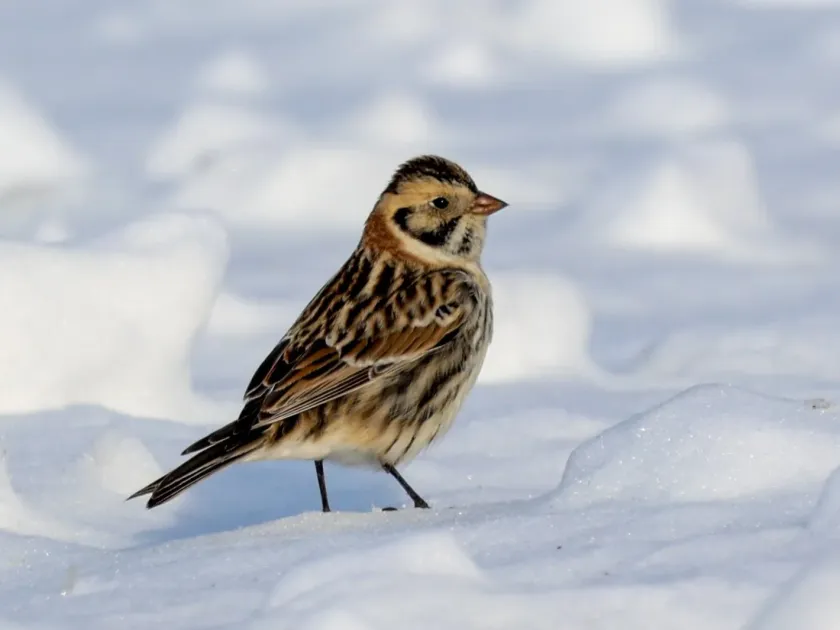
Description
How to identify
The Lapland longspur (Calcarius lapponicus) is a passerine bird in the longspur family, Calcariidae. During the breeding season, males are distinguished by their black faces and throats, contrasted by a vibrant chestnut-red nape.
These birds measure approximately 15–18 cm in length. Females and non-breeding birds exhibit a duller, streaky brown plumage that provides excellent camouflage in open tundra and agricultural settings.
They are characterized by an undulating flight pattern and frequent calling. Ornithologists and agronomists monitor these birds during their migratory seasons when large flocks descend upon agricultural lands.
Although they are primarily arctic nesters, their migration paths often overlap with major grain-producing regions, leading to potential interactions with agricultural ecosystems.
It is important to differentiate this species from other sparrow-like birds to ensure appropriate monitoring, as their flock behavior can be highly unpredictable depending on environmental stressors.
What it damages
The Lapland longspur causes damage to cereal crops by feeding on developing grains. They specifically target wheat, barley, and rye, leading to significant yield loss.
Beyond direct grain consumption, the mechanical damage caused by large flocks landing and trampling the crops leads to lodging. This makes harvesting difficult and results in shattered grains left on the soil.
The most vulnerable phase is the milk-to-dough stage of grain development, as the kernels are soft, moisture-rich, and highly palatable to the birds.
Damage is often localized along field edges where the birds have better visibility of predators and easier take-off conditions. However, large flocks can cause widespread field degradation.
The damage to the crop structure creates entry points for fungal pathogens, which further diminishes grain quality, making it less suitable for commercial storage or food processing.
When it appears
The presence of Lapland longspurs in agricultural areas is highly seasonal, dictated by their bi-annual migration cycles. They are most commonly encountered during autumn and spring movements.
The autumn migration is critical as it often coincides with the ripening phase of cereals. Large flocks gather to store energy, making cultivated fields a primary feeding destination.
Spring activity can be equally harmful, particularly for winter cereal crops. The birds may forage on seeds that have not been adequately covered by soil after sowing, affecting germination rates.
Daily activity patterns show peak foraging in the early morning and late afternoon. Weather patterns in their northern habitats significantly influence how long these flocks persist in agricultural zones.
Effective scouting should intensify during the identified migratory windows to preemptively deploy deterrents before major crop damage occurs.
Control measures
Managing Lapland longspurs requires a non-lethal approach focused on deterrence and habitat modification. Many jurisdictions protect migratory species, making lethal control illegal.
Visual deterrents, such as raptor silhouettes and reflective tapes, are effective at creating a hostile environment that encourages the birds to forage elsewhere.
Acoustic deterrents that broadcast predator calls or distress signals are highly effective at disrupting flocking behavior and preventing birds from settling in the fields.
Good agricultural practices, such as ensuring proper planting depth and facilitating efficient, timely harvesting, remain the best defense against long-term losses.
- Regular monitoring of migratory patterns.
- Deployment of dynamic scarecrows.
- Maintenance of clean field perimeters to reduce bird interest.
- Use of certified bio-acoustic repulsion technology.
Taxonomy
- Latin name
- Calcarius lapponicus
- Family
- Emberizidae
- EPPO code
- CALKLA
Discussion
No discussions yet — be the first.