
Buntings
Emberiza
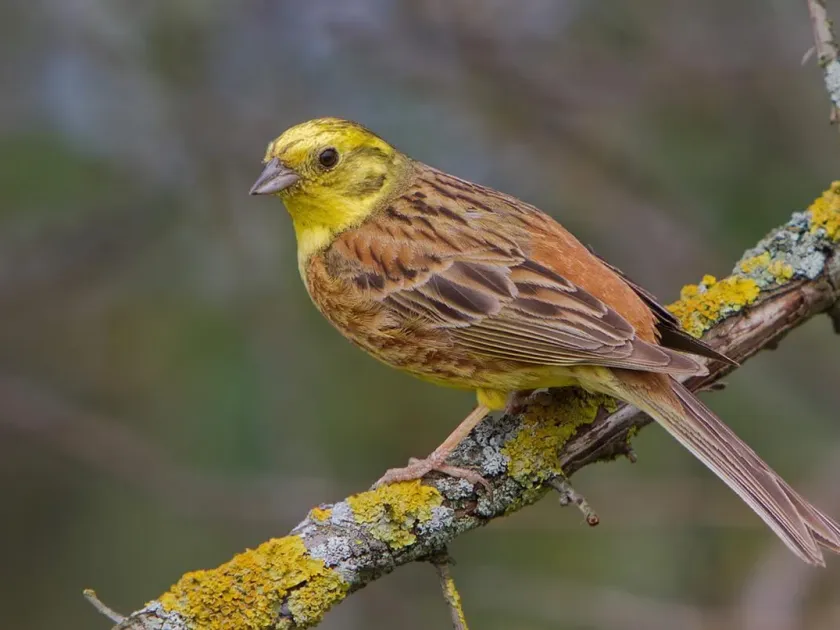
Description
How to identify
Buntings (Emberiza) are a genus of passerine birds belonging to the Emberizidae family. In an agronomic context, they are considered pests of cereal crops because they prefer to feed on cereal seeds during the ripening stage.
Physically, buntings are characterized by a conical, sturdy beak specifically adapted for hulling seeds. Their plumage coloration often includes combinations of yellow, brown, and tan, which allows them to effectively camouflage themselves within stubble and standing crops.
In size, these birds are comparable to or slightly larger than sparrows. In field conditions, they are easily identified by their typical behavior: they often stay in small flocks and, if threatened, fly to adjacent plots while maintaining visual contact with the food source.
Systematically, the genus Emberiza includes many species, the most well-known of which is the yellowhammer. Their population and habitat range depend directly on the availability of feeding grounds and the presence of woody or shrubby vegetation along field edges.
An agronomist should understand that buntings are primarily granivorous, although during the nesting season they may consume insects, which partially compensates for the damage caused to crops in early summer.
What it damages
Buntings primarily cause damage to cereal grain crops such as wheat, barley, oats, and millet. They attack crops during the milk and dough stages of grain development, plucking the grain directly from the ear.
In addition to cereals, the birds may damage oilseed crops, including sunflowers, as well as the seeds of various weeds, which makes their role in the agro-ecosystem twofold.
The greatest losses are recorded in areas adjacent to shelterbelts, ravines, or shrub thickets, which serve as cover and nesting sites for the birds.
The harm manifests not only in the direct consumption of grain but also in the mechanical breaking of ears, which leads to grain shattering onto the soil and a reduction in the quality of the marketable harvest.
In cases of large flocks congregating in a specific field, overall yield losses on the edges of the plots can reach between 5 and 15 percent, which is economically significant for large-scale operations.
When it appears
The period of peak pest activity occurs during the summer months — from late June to early August, when the grain in the ears reaches the milk and dough ripening stages.
During the spring, buntings are less visible in fields as their diet shifts toward last year's weed seeds and early greens, which causes almost no harm to cultivated crops.
In the autumn, birds often concentrate on harvested fields, where they glean spilled grain, performing a beneficial sanitary function, although their presence in unharvested late-maturing crops remains undesirable.
Daily activity cycles are most pronounced in the early morning and evening hours when birds perform intensive flights from roosting sites to feeding areas.
During cold periods, buntings migrate or gather in nomadic flocks, meaning the threat to agricultural crops is completely absent during the winter season.
Signs of infestation
The first sign of buntings in a field is the presence of small flocks taking flight upon the approach of machinery or people. Characteristic acoustic markers, such as typical chirping heard from nearby treelines, also serve as a signal.
Visual inspection of the ears reveals characteristic damage: the presence of empty floral glumes from which the grain has been extracted, and torn tissue remnants of the ear.
On the soil beneath bird congregating spots, one can often find seed husks or shells, as well as specific droppings, which indicate the prolonged presence of a flock in the area.
If a field is frequently visited by birds, "bald spots" form at the edges of the crop, where the ears are found to be damaged or completely devoid of grain.
Frequent bird presence in a field often provokes secondary issues, such as plant trampling and soil compaction in localized areas.
Control measures
For crop protection, it is recommended to use acoustic scarers that mimic the calls of predatory birds or the alarm signals of buntings themselves, creating a disturbance zone for the pests.
Effective methods include the use of visual deterrents: reflective tapes or predator decoys (e.g., hawk or kite effigies), which must be moved periodically to prevent habituation.
Agronomic measures include timely and efficient harvesting to reduce the time that ripe grain remains in the field and is accessible to birds.
It is important to monitor the state of shelterbelts around fields, periodically performing sanitary maintenance to minimize the number of convenient nesting sites and daytime perches for the birds.
- Usage of propane cannons during the critical stages of grain ripening.
- Creating protective border strips around the field using crops less attractive to birds.
- Proactive weed control, as weed seeds attract birds to the fields.
Taxonomy
- Latin name
- Emberiza
- Family
- Emberizidae
- EPPO code
- EMBRSP
Discussion
No discussions yet — be the first.