
Ortolan bunting
Emberiza hortulana
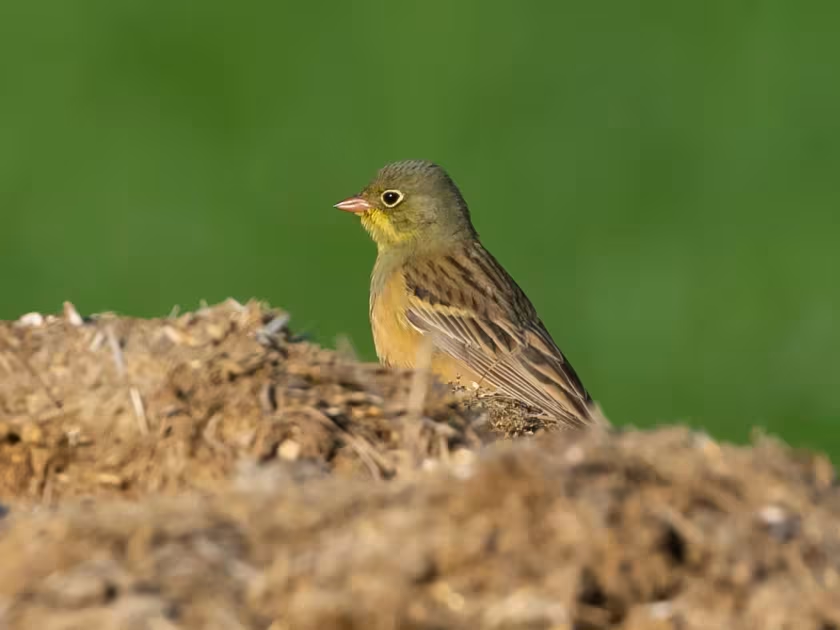
Description
How to identify
The Ortolan bunting (Emberiza hortulana) is a small passerine bird belonging to the bunting family. It is characterized by an olive-grey head and a yellowish throat framed by a distinct dark malar stripe.
It prefers open landscapes, agricultural fields, and vineyard margins, where it finds abundant food and suitable nesting habitats.
The species is known for its melodious song and has faced significant population declines in Europe, leading to strict legal protection in many jurisdictions.
Despite its protected status, in agricultural regions, large groups may congregate on crops during migratory stopovers or post-breeding phases.
Agnonomists should note that their appearance is highly seasonal, primarily linked to the ripening stages of small-grain cereals.
What it damages
Ortolan buntings primarily feed on the seeds of cereal crops, including wheat, barley, and oats, particularly during the milky to soft-dough grain stages.
In vineyards, they can cause damage by pecking at ripening berries, which opens entry points for secondary infections and fungal rot.
While they also consume weed seeds, which can be beneficial, their high concentration on valuable crops during harvest time results in measurable yield losses.
The most severe damage is typically observed at the field edges, where the birds have easy access to the crop and can quickly escape if disturbed.
Flock feeding behavior leads to concentrated damage spots, making the overall field impact unpredictable without proper monitoring.
When it appears
As a migratory species, the Ortolan bunting arrives at its breeding grounds in late spring, typically during April and May.
The peak period of agricultural impact occurs throughout July and August, when fledglings have left the nest and the birds gather in feeding flocks.
The southward migration begins in late August and lasts through September, marking the end of their presence on European farmland.
Their activity correlates strongly with the harvest calendar, meaning birds are most prevalent just before the crops are combined.
Daily activity patterns show that feeding is most intense during the early morning and late afternoon hours.
Signs of infestation
Visual identification of crop loss includes empty, shredded, or partially consumed grain heads, which are diagnostic indicators of bird feeding.
The presence of avian droppings within the field rows or on plant stems is a reliable sign of consistent feeding pressure in specific areas.
On vineyards, the tell-tale signs are small, pecked holes in berries, often accompanied by darkening tissue around the wound site.
Frightened flocks flying from hedge rows to the field edges and back provide immediate evidence of ongoing feeding activity.
Sudden gaps in the grain yield at the perimeter of the crop are clear indicators that a local population has established a feeding routine.
Control measures
Acoustic deterrents that broadcast recorded distress calls or predator sounds are among the most effective non-lethal methods for protecting grain crops.
Visual scare tactics, such as hanging reflective tape or placing predator decoys, can disrupt the birds' feeding habits temporarily.
Implementing rapid, timely harvesting schedules is the most effective management strategy to reduce the window of exposure to bird damage.
Physical exclusion, such as the use of bird-proof netting, is highly recommended for high-value crops like table grapes.
Always verify local environmental regulations before implementing any control program, as the Ortolan bunting may be protected by conservation laws.
Taxonomy
- Latin name
- Emberiza hortulana
- Family
- Emberizidae
- EPPO code
- EMBRHO
Discussion
No discussions yet — be the first.