
Zoniopoda omnicolor
Zoniopoda omnicolor
Description
How to identify
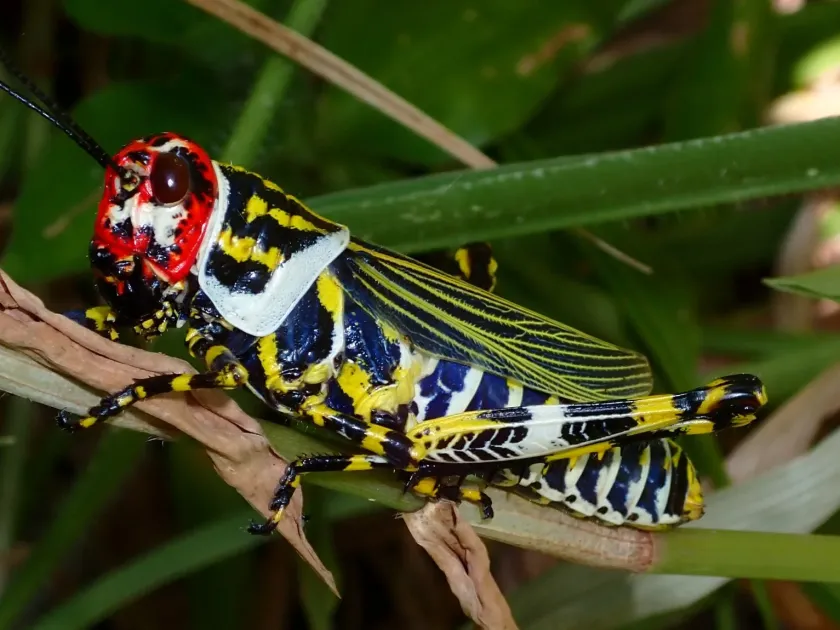
Zoniopoda omnicolor belongs to the order Orthoptera and the family Romaleidae. This insect is easily identified by its striking, vibrant warning coloration, which indicates to predators that it possesses chemical defenses.
Adults exhibit a distinct pattern of black, yellow, and red markings on their bodies and wings. Nymphs, or immature stages, also display bright colors, making them highly visible on host plants.
This species is well-known for sequestering toxins from the plants it consumes, rendering it unpalatable to most birds and small mammals that would otherwise prey on it.
Unlike migratory locust species, Zoniopoda omnicolor typically maintains a sedentary lifestyle, focusing its activity in areas where food sources are plentiful.
When threatened, the insect can discharge a foul-smelling defensive fluid from its thoracic glands, a behavior that aids in its survival against threats.
What it damages
This pest is a polyphagous insect, meaning it feeds on a wide range of plant species. It particularly favors plants from the Solanaceae and Fabaceae families, including essential crops.
In agricultural settings, it frequently attacks soybean, bean, and potato crops. During periods of high population density, it can strip plants of their foliage completely.
The damage is not limited to leaves; the insects also feed on tender shoots and stems, which stunts plant growth and significantly diminishes overall crop yield.
In cases of heavy infestation, Zoniopoda omnicolor can cause devastating loss to young seedlings, often consuming them down to the base in a short time.
By consuming leaf tissue, the pest significantly reduces the photosynthetic capacity of the plant, which is crucial for the development of pods and tubers.
When it appears
The life cycle of Zoniopoda omnicolor is heavily influenced by seasonal precipitation and temperature. Nymph emergence usually coincides with the beginning of the warmer season.
Eggs are deposited in the soil within specialized protective cases known as egg pods, which allow them to survive through unfavorable weather conditions during winter.
Growth occurs through several molting stages; each stage requires substantial feeding to reach the next level of development.
Adults reach peak activity during the middle of the summer, which is the period when they reproduce and lay eggs to ensure the next generation survives.
As the weather cools down in autumn, the activity of adults declines, leading to the conclusion of the life cycle as they finish egg-laying in the ground.
Signs of infestation
The primary sign of infestation is the presence of large, irregular holes along the margins of leaves. Unlike smaller pests, these grasshoppers consume large portions of the leaf blade.
The accumulation of frass (insect excrement) under the infested plants is a clear indicator that a colony has been feeding in that specific area.
Because they are brightly colored and often feed in open areas, the insects themselves are easily visible during routine inspections of the field.
Tattered leaf edges, defoliated stems, and damaged flower buds are common symptoms that indicate the presence of this pest on the property.
- Ragged leaf margins
- Stripped stems
- Visible brightly colored insects
Control measures
For small gardens or limited areas, manual collection of the insects is a highly effective and environmentally friendly method of control.
Agricultural practices such as deep tillage during the fall or winter can effectively destroy egg pods buried in the soil, preventing the next generation from emerging.
Biological control using entomopathogenic fungi, such as Beauveria bassiana, offers a promising solution that targets the pest while preserving the health of the local ecosystem.
If population levels reach economic thresholds, the application of selective insecticides may be necessary, provided they are used in accordance with environmental regulations.
Regular field monitoring during the early stages of the growing season is essential to identify and manage emerging nymph populations before they cause significant crop damage.
Taxonomy
- Latin name
- Zoniopoda omnicolor
- Order
- Orthoptera (locusts)
- Family
- Romaleidae
- EPPO code
- ZONPOM
Discussion
No discussions yet — be the first.