
Tropidacris
Tropidacris
Description
How to identify
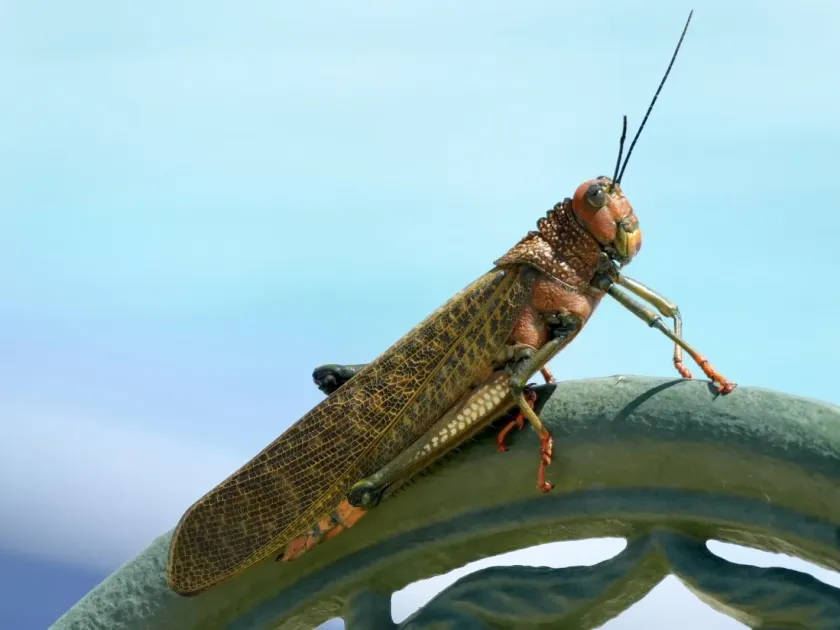
Tropidacris is a genus of large grasshoppers belonging to the family Acrididae. These insects are among the largest in the order, reaching impressive sizes in their adult stage.
Their appearance is characterized by bright, often warning colors on the hind wings, which become visible only during flight. Adult bodies possess powerful jaws and well-developed hind jumping legs.
The life cycle involves incomplete metamorphosis: egg, nymph, and adult. Unlike many other locust species, Tropidacris can maintain a solitary lifestyle, but their population can grow rapidly under favorable conditions.
The development of these insects depends heavily on the temperature and humidity of the tropical zones they inhabit. Females lay eggs in the soil, forming dense pods to protect their offspring.
Identification of the species requires analysis of the pronotum structure and wing venation, as members of the genus can be morphologically similar to other large tropical grasshoppers.
What it damages
The primary damage is caused by adults and late-instar nymphs, which are highly voracious. They can consume significant amounts of green biomass in a very short period of time.
The list of host plants includes various trees, shrubs, and herbaceous crops. The greatest damage is recorded in plantation farming across South and Central America.
The pest damages leaves, young shoots, and the bark of saplings, leading to weakened photosynthesis and stunted plant growth. Massive infestations can result in complete defoliation.
Tropidacris insects are polyphagous, feeding on crops from the bean and nightshade families, as well as many tree species. This makes them dangerous to a wide range of agricultural lands.
Economic losses include not only crop yield reduction but also the costs associated with implementing protection measures across vast plantation areas.
Signs of infestation
The first sign of infestation is the presence of large, irregular holes in the leaf blades, which increase in size as the insect population grows.
The presence of the pest is indicated by large amounts of frass (excrement) found on the soil surface beneath tree canopies or on plant leaves.
A characteristic auditory sign is the stridulation (chirping) of males during the day, which can be heard from a significant distance away from the breeding focus.
Noticeable damage to the bark of young shoots is often accompanied by secondary fungal infections due to the compromise of plant tissue integrity.
During periods of mass reproduction, visual clustering of insects on trunks and branches is easily observed during plantation patrols.
Control measures
Chemical control methods include the use of contact-stomach insecticides effective against locusts, strictly following the dosage regulations for application.
Biological control relies on the use of entomopathogenic fungi, which infect insects under high-humidity conditions and help reduce population numbers.
Agrotechnical measures include maintaining clean inter-rows and destroying weed vegetation, which can serve as temporary shelter for Tropidacris nymphs.
Mechanical collection by hand is justified only on small garden plots with low pest density; this method is ineffective on an industrial scale.
- Monitoring adult population density using light traps.
- Application of biological products based on Metarhizium.
- Individual protection of valuable saplings using nets.
- Regular inspections of tree canopies for egg-laying sites.
Taxonomy
- Latin name
- Tropidacris
- Order
- Orthoptera (locusts)
- Family
- Romaleidae
- EPPO code
- TRODSP
Discussion
No discussions yet — be the first.