
Xyleus
Xyleus
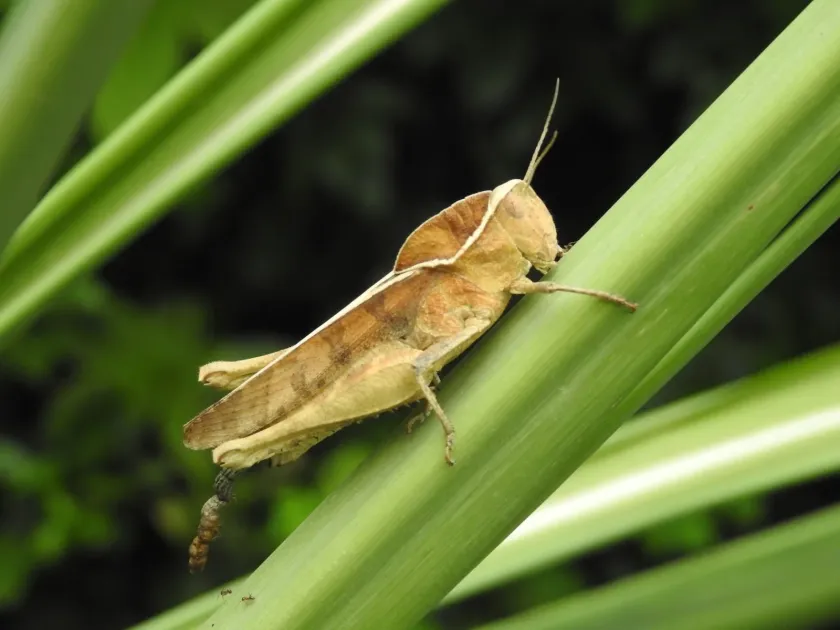
Description
How to identify
Xyleus is a genus of grasshoppers belonging to the family Romaleidae within the order Orthoptera. These are large insects that possess a robust body structure and distinct morphological features, distinguishing them from common grasshoppers found in temperate regions.
Adult insects often display bright coloration, which serves as aposematism, a warning to predators about their potential toxicity or unpalatable taste. Their head is relatively large, equipped with powerful mandibles adapted for chewing fibrous plant tissues.
The life cycle involves hemimetabolous development, progressing through egg, nymph, and adult (imago) stages. There is minor sexual dimorphism, with females generally being larger than males, possessing specialized structures for oviposition in soil substrates.
Wing development in most species is robust, enabling them to migrate over significant distances in search of food resources. They exhibit high activity levels during daylight hours, especially in warmer climates.
Systematically, this genus is closely related to other tropical and subtropical orthopterans, which contributes to their remarkable resilience against environmental fluctuations and high adaptability to various habitats.
What it damages
Xyleus is polyphagous, meaning it feeds on a wide range of host plants, including various cereals, legumes, and woody species. In regions where they are prevalent, they can cause substantial damage to agricultural yields.
The primary damage is caused by mass defoliation, where the insects consume leaves entirely, thereby disrupting photosynthesis and severely weakening the plant. High population densities can lead to the total loss of crops in affected fields.
Beyond leaf consumption, these insects may damage stems and young shoots, impeding nutrient transport throughout the plant. This frequently leads to the premature desiccation of plant tissues and stunted growth.
The pest is particularly dangerous due to its capacity for sudden, massive outbreaks. Because individual specimens are large, their voracious appetite can cause catastrophic damage to fields in a very short amount of time.
Young plants are most vulnerable during their active growth phase, as they lack the energy reserves needed to recover from the loss of significant foliage area after an infestation.
When it appears
The life cycle of Xyleus is heavily dependent on seasonal temperature fluctuations. Maximum activity occurs during the warmer months, which facilitates intensive feeding and rapid population growth.
Overwintering typically occurs at the egg stage, with eggs deposited deep within the soil. This burial provides the necessary protection against cold temperatures and desiccation during unfavorable conditions.
Nymphs emerge once soil temperatures rise to an optimal level for development. They progress through several instar stages, gradually increasing in size and developing adult characteristics over the course of the season.
The peak of damage is observed in mid-summer when the population reaches the adult stage. During this period, the insects are most mobile and difficult to manage effectively due to their flight capabilities.
In regions with multiple rainy seasons, it is possible to observe two or more generations of this pest annually, which significantly complicates management efforts as multiple life stages may be present simultaneously.
Signs of infestation
The most prominent sign of a Xyleus infestation is the presence of large, irregular holes and ragged edges on leaf blades. Plants may appear heavily defoliated, with only major leaf veins remaining in severe cases.
Frass (insect excrement) found on the soil surface beneath the plants is a reliable indicator of their presence, as the large size of the insects produces distinctively sized and shaped waste.
The insects are often visible during the cooler parts of the day, such as early morning or late evening, as they rest on stems or foliage. Their large size and coloration make them stand out against the plant background.
Auditory signs include the stridulation produced by males to attract mates. High levels of chirping in a field are a strong indicator of a large concentration of these pests, signaling an immediate need for intervention.
Areas damaged by the pest often look sparse and barren, with stems stripped of foliage, which is clearly visible from a distance and negatively impacts the overall health and vigor of the crop.
Control measures
Managing Xyleus requires an integrated approach that combines agrotechnical and chemical methods. Deep plowing during the fall is essential to disturb and destroy egg pods hidden in the soil.
The application of systemic insecticides is highly effective for targeting young nymphs before they develop wings. Early intervention is critical to limit the potential for mass migration and flight-based dispersal.
Biological control strategies include the use of entomopathogenic fungi, which naturally target grasshopper populations, providing an environmentally friendly way to reduce their numbers without harming beneficial species.
Maintaining a weed-free perimeter around agricultural fields is important, as weeds often act as a habitat and primary food source for the pests before they shift their focus to cultivated crops.
- Use of light traps for monitoring population density.
- Edge-spraying of fields upon the first signs of infestation.
- Regular mowing of adjacent grasslands to reduce breeding sites.
Taxonomy
- Latin name
- Xyleus
- Order
- Orthoptera (locusts)
- Family
- Romaleidae
- EPPO code
- XLEUSP
Discussion
No discussions yet — be the first.